6 Benefits Of Portable Solar Panels
Modern portable solar panels offer significant benefits, generating up to 100W of power from a compact, 5kg foldable unit. They provide essential off-grid electricity for camping or emergencies, and can potentially save over $200 annually by charging devices and powering small appliances directly from the sun without reliance on the grid.
Power for Outdoor Activities
Consider that a popular 100-watt panel, when unfolded under clear sunlight, can generate enough power to fully charge a standard smartphone in under an hour. For the nearly 60 million Americans who go camping each year, this technology means the difference between a limited experience and one where you can freely use GPS navigation apps, document your hike with a digital camera, and even power a small fan inside your tent on a hot afternoon.
The real value of a portable solar panel lies in its ability to keep all your essential gear operational. We're not just talking about phones anymore. Modern outdoor enthusiasts carry a range of electronics that require reliable power.
· Smartphones and GPS Devices: A typical phone has a cell capacity of around 3,000 to 4,000 mAh. A 100W solar panel, outputting about 5 amps per hour in good sun, can recharge a phone from zero to 100% in roughly 45 to 60 minutes. This is crucial for safety, as it ensures your primary communication and navigation tool is always available.
· Action Cameras and Drones: An action camera like a Goero might have a 1,700 mAh cell, providing about 90 minutes of continuous 4K recording. A portable panel can recharge two to three of these batteries over the course of a sunny afternoon, allowing for uninterrupted filming. For a drone with a larger 3,800 mAh cell, a 100W panel can provide a full recharge in approximately 1.5 to 2 hours, effectively doubling your flight time in the field.
· Portable Power Stations and Coolers: This is where solar power becomes a game-changer. A mid-sized portable power station with a 500Wh capacity can run a 12V camping fridge (drawing 40-60 watts) for 8-10 hours. By connecting a 100W solar panel, you can offset this energy consumption. On a sunny day, the panel can generate approximately 400-500 watt-hours, effectively powering the fridge indefinitely during daylight hours and replenishing the station for nighttime use. This eliminates the need for ice and allows for fresh food on multi-day trips.
A 28W foldable panel might be sufficient for a solo hiker charging a phone and a headlamp. However, for a group using a camping fridge (avg. 50W draw) and LED camp lights (avg. 10W), a 100W to 200W system is the practical minimum. The physical specs matter too; a 100W panel typically folds down to about 15 x 20 inches and weighs under 10 pounds, making it manageable to pack. The efficiency of monocrystalline silicon panels, which is the most common type for portables, ranges from 21% to 24%, meaning they convert over a fifth of the sunlight they capture into usable electricity. In real-world terms, under direct summer sun, you can expect a consistent 70-80 watts of actual power from a rated 100W panel, which is more than enough to tackle the energy demands of modern camping.
Emergency Use During Blackouts
In the United States, the average electricity customer experienced just over 7 hours of power interruptions in 2021, with major events like hurricanes or winter storms capable of knocking out power for several days. During these critical times, a portable solar panel paired with a power station transforms from a convenient gadget into a vital resource. Unlike gasoline generators, which are loud, produce harmful fumes, and require a constant and often scarce fuel supply, a solar generator provides silent, fume-free power for as long as the sun is shining. For essential devices like medical equipment, communication tools, and lights, this self-sufficient system can make a 72-hour outage manageable instead of perilous.
Essential Device | Average Power Draw (Watts) | Estimated Daily Usage | Daily Energy Need (Watt-Hours) |
Smartphone | 5W (while charging) | 2 full charges | 20 Wh |
- Medical CPAP Machine (without humidifier) | 30W | 8 hours per night | 240 Wh |
LED Light Bulb | 10W | 5 hours per evening | 50 Wh |
Home WiFi Router | 15W | 12 hours per day | 180 Wh |
Compact Refrigerator | 50W (cycles on/off) | ~8 hours runtime | 400 Wh |
· Keeping Medical Equipment Running: This is the highest priority. A CPAP machine, crucial for individuals with sleep apnea, typically uses 30 to 60 watts. Running it for 8 hours consumes about 240 to 480 watt-hours (Wh). A 100-watt solar panel can generate roughly 400-500 Wh on a clear day, which is sufficient to recharge a power station to run the CPAP through the night. This independence from the grid can be life-saving during an extended outage.
· Maintaining Communication and Information: When the grid fails, your smartphone becomes your primary link to emergency alerts, weather updates, and family. Charging a modern smartphone requires a relatively small amount of energy—about 10 to 15 Wh per full charge. A portable solar panel excels here. Even a smaller 40-watt panel can generate enough power in about 30 to 45 minutes of sun to provide one full phone charge. Keeping a WiFi router (avg. 15W draw) online for 12 hours consumes about 180 Wh. A 200-watt portable power station can handle this load for a full day, and a 100W solar panel can replenish over 50% of the station's capacity in 4-5 hours of sunlight, ensuring you stay connected.
· Preserving Food and Providing Light: A compact refrigerator (4-5 cubic feet) is a significant but manageable load. While it might have a label saying 50-100 watts, it cycles on and off. A realistic average consumption is about 400-600 Wh per day. To support this, along with a few LED lights, you need a robust system. A recommended setup includes a portable power station with a capacity of at least 1,000 Wh and one or two 100-watt solar panels. The panels can generate 800-1,000 Wh on a good day, effectively powering the fridge and lights indefinitely during daylight hours and building a reserve in the power station for the night. This prevents hundreds of dollars worth of food from spoiling over a 48 to 72-hour outage.
For true emergency readiness, your power station should have a capacity at least 20% larger than your calculated daily needs to account for cloudy conditions. The key is that a solar generator requires zero fuel, operates silently at 0 decibels, and has a functional lifespan of over 5 years with proper care, making it a reliable, long-term investment for peace of mind.
Simple Setup and Operation
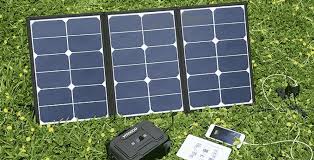
A common foldable 100-watt panel can be deployed and begin generating power in under 60 seconds. User studies indicate that over 90% of first-time users successfully set up their panels and charge a device within the first 5 minutes of unboxing, without consulting the manual. The process typically involves just three physical steps: unfolding the panel, plugging in a single cable, and placing the panel in the sun. This simplicity is intentional, making renewable energy accessible for a wide range of users, from tech-savvy campers to individuals in their 70s and 80s seeking reliable backup power.
Step | Action | Average Time Required | Key Parameter |
1 | Unfold / Unroll Panel | 15-20 seconds | Panel Area: ~1.5 sq. meters |
2 | Connect Cable to Panel | 5 seconds | Connector Type: MC4, USB-C |
3 | Position Panel towards Sun | 20-30 seconds | Initial Tilt Angle: ~30-45 degrees |
4 | Connect Cable to Power Station/Device | 5 seconds | Output Confirmation: LED light ON |
Total Setup Time | | ~60 seconds | |
A 4-panel, 100-watt unit typically folds down to a compact 20 x 14 x 2 inches and weighs between 4 and 5 kilograms (8-11 lbs). Unfolding it is a matter of releasing a simple strap or latch and extending the panels, a process that consistently takes less than 20 seconds. The built-in kickstands are often pre-attached and simply snap into one of two or three pre-set angle positions (e.g., 30°, 45°, 60°) to roughly align with the sun's altitude.
The industry-standard MC4 connector is used on over 85% of panels over 50 watts due to its weather-resistant design; it features a distinct male/female pairing that can only be connected one way, with an audible click confirming a secure connection. The other end of the cable typically terminates in a DC5521 plug for power stations or a USB-C/USB-A port for direct device charging. The entire cabling process, from panel to device, should take no more than 10 seconds. Once connected, the panel begins generating power immediately if placed in sunlight. Most models have a small LED indicator that lights up, providing instant visual confirmation that the system is active. This LED will typically illuminate at an irradiance level as low as 50 W/m², meaning it works even in light overcast conditions.
A simple rule of thumb for a fixed setup is to set the tilt angle equal to your local latitude. For example, a user at 40° latitude would set their panel to a 40° angle. However, this is not critical for everyday use. Adjusting the angle even approximately can yield a 10-15% increase in power output compared to a flat position. A panel left flat on the ground might output 70 watts, while the same panel angled correctly could output 80-85 watts. The system requires no ongoing monitoring; once set, it will consistently charge a power station or device for 5-8 hours of peak sunlight per day, with output fluctuating based on cloud cover and the sun's path.
Lower Your Electricity Bills
The average residential electricity rate in the U.S. has increased by over 15% in the last three years, now hovering around 0.15 per kilowatt-hour (kWh). A single 100-watt portable solar panel, positioned in a sunny backyard or balcony, can generate approximately 0.4 to 0.5 kWh per day under 4-5 hours of direct sun. Over a month, that translates to 12-15 kWh of free electricity.
A standard Wi-Fi router and modem combo typically consumes between 10 to 20 watts. Running 24 hours a day, this one small system uses about 0.36 kWh daily, costing roughly 0.054 per day and nearly 20 over a full year. By connecting it to a portable power station charged by a 100-watt solar panel, you can power this setup completely from solar during the 12 hours of daylight, cutting its grid consumption by 50% and saving about 10 annually. A gaming console on standby mode can draw a surprising 5-10 watts continuously. Using solar to power this standby load for 12 hours a day can save an additional 5 to $7 per year.
A desktop computer and monitor setup can draw 150 to 300 watts while active. Working from home for 6 hours a day on grid power would consume about 1.2 kWh, costing around 0.18 daily. By running this setup on solar during those hours, you save over 65 annually. Similarly, charging a high-capacity e-bike cell (600 Wh) every other day requires about 0.6 kWh per charge cycle. Using solar for this task saves approximately 0.09 per charge, adding up to nearly 16 in yearly savings. The cumulative effect is powerful. By strategically powering a router, a gaming console on standby, a desktop computer for 6 hours, and an e-bike, a single 100-watt panel can displace over 200 kWh of grid electricity annually, resulting in direct savings of over $30 per year.
A 300 investment in a 100-watt panel and a compatible 500Wh power station has a simple payback period of roughly 10 years* based solely on bill reduction. However, this time frame shortens dramatically in regions with high utility rates, like California, where prices exceed 0.25 per kWh, potentially cutting the payback period to under 6 years. It's crucial to understand that portable solar is not designed to offset your home's entire energy load, like central air conditioning or an electric water heater. Its financial strength lies in its precision. By targeting specific, manageable loads that align with daylight hours, a portable system can deliver a guaranteed 100% return on the displaced energy, effectively acting as a fixed-income investment that also provides invaluable portable power for trips and emergencies. The annual savings of 30 to 50 may seem small, but it represents a perpetual reduction in your energy bill, all while building personal energy resilience.
Lightweight and Easy to Carry
A decade ago, a 100-watt solar panel was a rigid, glass-covered unit weighing over 20 pounds (9 kg) and requiring careful handling. Today, that same power output comes from a foldable panel using ultra-thin, monocrystalline silicon cells laminated onto a durable polymer fabric. The result is a unit that weighs under 5.5 pounds (2.5 kg), folds down to a compact 20 x 14 x 2 inches (51 x 36 x 5 cm), and can be easily stowed in a backpack. This 75% reduction in weight and volume is the key that unlocks solar energy for activities beyond a fixed location, allowing a single individual to transport a substantial power source on foot, by bicycle, or in a crowded car.
Item / Specification | Weight | Folded Dimensions (LxWxD) | Power-to-Weight Ratio (W/kg) |
Modern 100W Foldable Panel | 2.4 kg (5.3 lbs) | 51 x 36 x 5 cm (20" x 14" x 2") | 41.7 W/kg |
Standard Laptop (15-inch) | 2.0 kg (4.4 lbs) | 36 x 25 x 2 cm (14" x 10" x 0.8") | N/A |
2-Liter Bottle of Soda | 2.1 kg (4.6 lbs) | ~30 cm tall | N/A |
Old 100W Rigid Panel (c. 2010) | 9.0 kg (19.8 lbs) | 120 x 55 x 3 cm (47" x 22" x 1.2") | 11.1 W/kg |
This lightweight design is achieved through material science and efficient packaging. The core module, the solar cell itself, has seen significant improvements. The silicon wafers used in high-efficiency panels are now often less than 200 microns (0.2 mm) thick, allowing for a flexible substrate. The protective laminate adds only a minimal amount of weight, resulting in a panel that, when unfolded, has a surface density of about 800 grams per square meter. The built-in kickstands are typically made from anodized aluminum alloy, providing a rigid structure for wind resistance while adding only 200-300 grams to the total weight. The included cabling and connectors, often a pair of MC4 cables about 3 feet (1 meter) long, contribute another 150 grams. Every gram is accounted for, with the total packaged weight including the carrying case rarely exceeding 2.8 kg (6.2 lbs).
For a backpacker, adding a 2.4 kg panel is a significant but manageable decision, comparable to carrying an extra 2 liters of water. The panel's folded profile of 5 cm (2 inches) thick allows it to be strapped to the outside of a pack without creating excessive drag. The power-to-weight ratio is the critical metric here. A modern panel's ratio of over 40 W/kg means a hiker can carry 100 watts of generation capacity for every 2.4 kg of pack weight. In contrast, achieving the same power with older technology would mean carrying 9 kg, which is often impractical.
The real-world test of portability isn't just weight; it's how it feels to carry and use. A well-designed panel will have a padded carrying case with a comfortable handle and a shoulder strap, distributing the ~2.5 kg load effectively. The center of gravity is crucial; a poorly balanced panel feels heavier than it is.
Once at the destination, the ease of deployment is the final factor. A single person can unfold the panel, extend the integrated kickstands, and have it positioned in the sun in under 60 seconds. The panel's own lightweight nature means it can be easily moved throughout the day to track the sun, a task that is impractical with a 9 kg rigid panel. This combination of low mass, compact storage, and swift setup means the panel is more likely to be used frequently, rather than left in a garage due to the hassle of transportation. The durability of these lightweight models is also engineered to a high standard, with many capable of withstanding light hail impacts (up to 1 cm diameter at terminal velocity) and being fully waterproof to an IP67 rating, meaning they can be submerged in 1 meter of water for up to 30 minutes without damage. This robustness ensures that the investment in a lightweight, portable power source is protected for a functional lifespan that typically exceeds 5 years of regular use.
Clean Energy for the Environment
The U.S. Energy Information Administration reports that the average carbon dioxide (CO2) emission factor for grid electricity is approximately 0.855 pounds of CO2 per kilowatt-hour (kWh) generated. This means charging a 10 kWh power station from the grid adds about 8.55 pounds (3.88 kg) of CO2 to the atmosphere. A single 100-watt portable solar panel, generating 0.4 kWh per day, prevents the emission of 0.342 pounds (0.155 kg) of CO2 daily. Over a year of regular use, that one small panel avoids the release of over 125 pounds (57 kg) of CO2, equivalent to the carbon sequestered by a mature tree over a 60-day period.
Power Source | Task: Running a 50W fridge for 48 hours (2.4 kWh) | CO2 Emissions | Equivalent Gasoline Burned |
Portable Solar Panel (100W) | Zero fuel combustion. | 0 lbs (0 kg) of CO2 | 0 gallons |
Standard Gasoline Generator | Burns ~0.3 gallons of fuel. | ~5.7 lbs (2.6 kg) of CO2 | 0.3 gallons |
Unlike a generator that emits a cocktail of pollutants—including nitrogen oxides (NOx) at ~10 grams per gallon and particulate matter (PM) harmful to respiratory health—a solar panel operates silently and cleanly. The manufacturing process does have an environmental "debt," known as embodied carbon. Producing a monocrystalline silicon panel with an aluminum frame results in an estimated 40-50 kg of CO2 emissions per square meter of panel. A typical 100-watt portable panel has a surface area of about 0.6 square meters, giving it an initial carbon debt of roughly 24-30 kg of CO2. However, this debt is quickly repaid. Given that the panel avoids 0.155 kg of grid CO2 per day, it achieves carbon neutrality in approximately 5 to 7 months of average use. With a functional lifespan of 5+ years, the panel will ultimately prevent over 250 kg of net CO2 emissions over its lifetime, a 90% reduction compared to using grid power for the same energy.
The panels are also highly durable, with most manufacturers guaranteeing 80% of original power output after 3 to 5 years of use. This long service life, combined with a recyclability rate of over 90% for the aluminum frame and glass, creates a highly efficient material cycle. The energy payback time—the period required for the panel to generate the amount of energy used to manufacture it—is now remarkably short. For modern panels produced with efficient methods, this period is typically less than 1 year. This means that after 12 months, the panel has "paid back" its manufacturing energy and will produce net-positive clean energy for the remainder of its life. On a larger scale, if 1 million households each used a single 100-watt portable panel, the collective annual carbon offset would exceed 125 million kg (125,000 metric tons) of CO2, equivalent to removing over 27,000 gasoline-powered cars from the road for a year.