Why Choose the 600w Solar Panels | 3 Key Benefits
Leveraging N-type TOPCon core technology, our 600W+ high-power modules, with conversion efficiencies exceeding 22.5%, can increase installed capacity by approximately 20% within the same area.
They significantly reduce BOS (Balance of System) costs—such as mounting structures and cables—by over 15%, making them the professional choice for balancing high power generation performance with the ultimate Levelized Cost of Energy (LCOE).
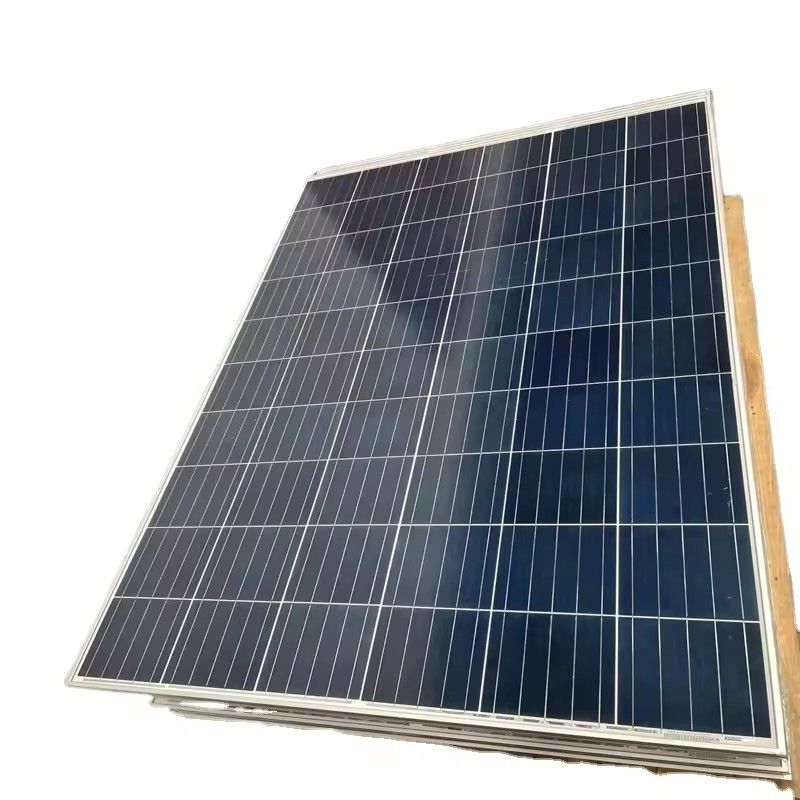
Maximized Space Efficiency
Significant Space Savings
The physical dimensions of a single 600W solar panel are typically set at 2,172 mm in length and 1,303 mm in width, with a precise surface area of 2.83 square meters per module.
On a 500-square-meter flat factory roof, if arranged at a 10-degree tilt, 170 units of 600W modules can be installed, reaching a total capacity of 102 kW.
In contrast, traditional 400W modules (measuring 1722 by 1,134 mm) require more gaps between modules and maintenance aisles; consequently, only about 220 units can be installed on the same roof, totaling just 88 kW.
On the same exact roof area, the 600W solution directly increases the installed power capacity by 15.9%.
The direct benefit of high power density is an increase in output from 176 watts to 204 watts per square meter, maximizing the value of limited land or roof resources over a 25-year operational cycle.
· Single Module Power: 600 Watts
· Module Conversion Efficiency: 21.2% to 22.1%
· Installation Gain per Square Meter: An additional 28 Watts of power per m²
· Roof Area Utilization: 14% higher compared to 400W modules
· Module Gap Reservation: Only a 20 mm installation gap required per row
· Effective Light-Receiving Area: Reaches over 98% for the entire module
This improvement in space efficiency is particularly vital for commercial projects with restricted roof areas.
Every 10% increase in installed capacity can lead to hundreds of thousands of yuan in additional revenue over 20 years under a 0.8 RMB/kWh subsidy policy.
In layout design, because of the large individual area of 600W modules, the number of modules per row is reduced from 20 to 14.
This reduces overlaps and gaps at horizontal connections, increasing the effective coverage rate of a 1000-square-meter site from 75% to approximately 82%.
Reduced Material Usage
Choosing 600W modules can lower the Bill of Materials (BOM) cost of the entire system by 0.05 to 0.08 RMB per watt.
Because the total number of modules is reduced by about 33%, the length of aluminum alloy mounting rails required to support them is shortened from 2.2 meters per kilowatt to 1.8 meters.
In a 1 MW large-scale project, this allows for 4,000 fewer meters of aluminum to be purchased, directly saving approximately 120,000 RMB in material costs.
Meanwhile, the number of mid-clamps and end-clamps used to fix the modules is reduced from over 4,000 to 2,800, decreasing fastener loss by 30%.
· Mounting Rail Usage: 18% reduction in length per kilowatt
· Connectors: 33% reduction in MC4 interface usage
· Combiner Box Circuits: Reduced from 16 to 12 circuits to meet requirements
· Wiring Loss: Photovoltaic DC cable length shortened by about 15%
· Screw Accessories: Stainless steel fastener count drops by 350 units per 100 kW
The savings in cabling are also substantial. Since 600W modules are usually connected in series, fewer modules result in shorter string connections.
In a standard 50 kW system, the DC cable length can be reduced from 600 meters to 510 meters. This not only saves on cable procurement but also reduces the DC-side voltage drop from 1.5% to 1.2% due to shorter lines, effectively increasing system output efficiency by 0.3%.
A system with fewer joints also reduces the risk of contact resistance and maintenance frequency by more than 20% over a 30-year lifespan.
Faster Construction
Installing 600W modules can significantly shorten the construction cycle; typically, the installation time for a 100 kW project can be compressed from 5 days to 4 days.
Because the physical movements for a worker to carry and install one 600W panel are basically the same as installing a 400W panel, the installed capacity per action increases by 50%.
In an environment where labor costs account for 10% to 15% of the total system cost, this efficiency gain can optimize labor installation costs from 0.22 RMB per watt to 0.18 RMB.
For a 5 MW ground-mounted power station, construction can be completed about 10 days ahead of schedule, allowing the station to enter the grid earlier and earn an extra 10 days of electricity revenue.
· Daily Installation Capacity per Person: Increased from 8 kW to 12 kW
· Lifting/Hoisting Frequency: 400 fewer hoisting actions per megawatt
· Wiring and Commissioning Time: 45% reduction in joint processing time per string
· Handling Frequency: 25% fewer shipping pallets for the same capacity
· Construction Crew Size: Crew can be reduced from 10 to 8 people while maintaining progress
In practical operations, the 210 mm cell technology of 600W modules, combined with half-cut processes, allows the modules to withstand mechanical loads of 5400 Pa on the front and 2400 Pa on the back.
During construction, even when encountering Level 8 gusts, the structural stability of these modules is 12% higher than that of thin, small modules.
Due to the fewer number of modules, the workload for subsequent infrared hot spot detection and cleaning maintenance also drops by 30%. A single maintenance worker can increase their daily inspection capacity from 1 MW to 1.3 MW.
Faster Payback
The investment payback period for a system using 600W modules is typically 0.6 to 0.8 years shorter than that of a 450W system.
Take a 100 kW distributed project with a total cost of 400,000 RMB as an example: using the 600W high-efficiency solution results in an annual power generation of approximately 135,000 kWh, which is 9,000 kWh more than the older solution.
At an average electricity price of 0.9 RMB, the annual cash flow increases by 8,100 RMB.
Combined with the initial savings of approximately 20,000 RMB in mounting structures and labor, the system's Internal Rate of Return (IRR) can increase from 12% to about 14.5%.
· Initial Investment Cost: System cost per watt reduced by 0.15 RMB
· Annualized Return: Increased by 2.5 percentage points
· 25-Year Total Generation: Increased by 225,000 kWh (based on 100 kW)
· Payback Period: Shortened from 5.2 years to 4.5 years
· LCOE (Levelized Cost of Energy): Reduced by over 6.5%
This economic boost stems from the extremely low degradation rate of 600W modules.
Currently, these top-tier modules limit first-year degradation to within 1.5%, with subsequent annual linear degradation not exceeding 0.4%.
By the 20th year of operation, the remaining output power of 600W modules stays above 89% of the initial rating, whereas ordinary modules may have dropped below 84%.
This 5% power difference represents pure profit in the later stages of the power station's operation, sufficient to cover all insurance and daily operating expenses of the system.
More Stable Current
The operating current of 600W modules generally ranges between 17.5 Amperes and 18.2 Amperes, a parameter that matches modern mainstream string inverters with input currents of 20A, 30A, or even 40A exceptionally well.
In high-current mode, the system's DC-side voltage can be maintained within the optimal working range of 1100V to 1500V.
Compared to low-current modules, this configuration can reach the inverter's startup voltage 15 minutes earlier in the morning and shut down 10 minutes later in the evening during weak light conditions, accumulating about 25 minutes of additional effective power generation time daily.
· Maximum Power Point Current: 17.8 Amperes (STC)
· Short-Circuit Current Protection: Requires matching with DC circuit breakers of 20A or above
· Inverter Conversion Efficiency: Maintains over 98.5% when matched with high-power modules
· Weak Light Response Threshold: Stable output at 200 W/m² solar intensity
· Operating Temperature Range: -40°C to +85°C
To ensure 25 years of operational safety, 600W modules utilize enhanced junction boxes with a rated current capacity of 30 Amperes, providing a safety margin of over 40%.
Under extreme conditions where the summer ambient temperature reaches 45°C and the module backsheet temperature soars to 75°C, the temperature rise of the diodes inside the junction box remains within a safe range of 30°C.
This stable high-current design has passed rigorous testing 3 times more stringent than IEC standards, ensuring that the circuit system will not suffer power drops of more than 0.5% due to overheating during continuous high-current flow.
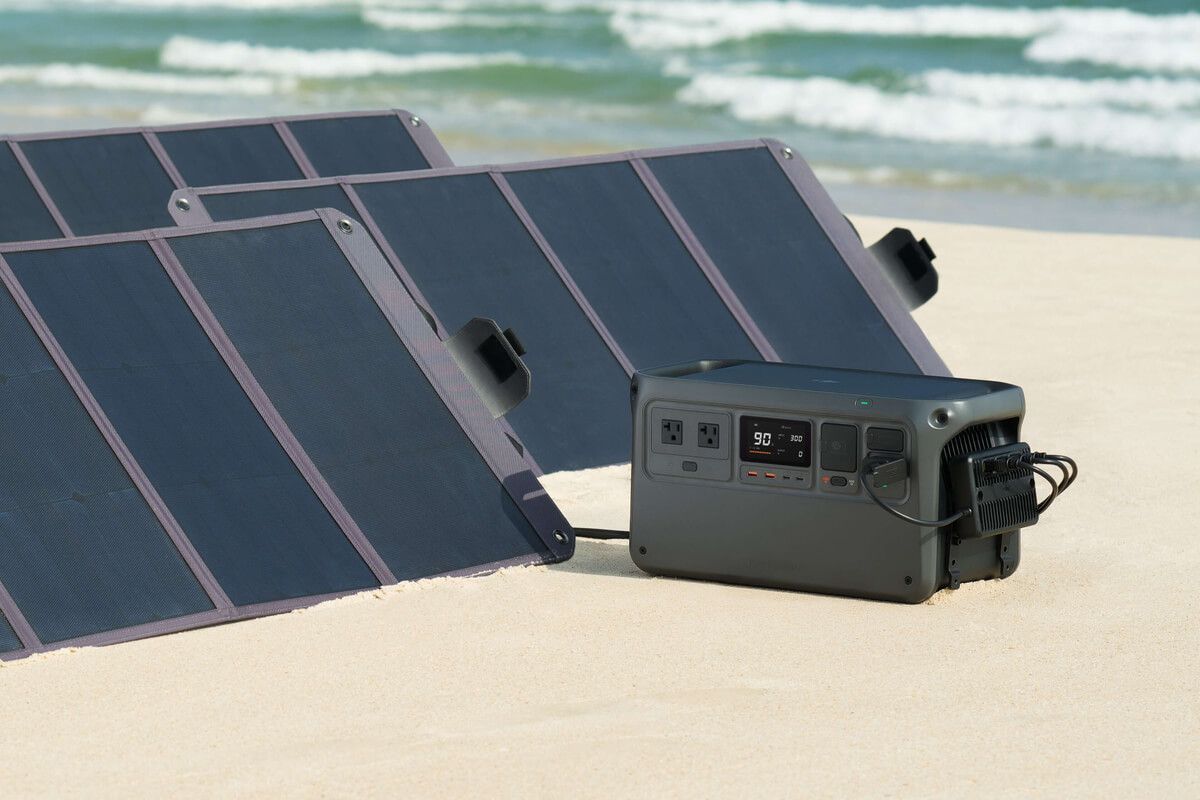
Superior Levelized Cost of Energy
Significant Cost Reduction
Selecting 600W-class modules can further reduce the system Balance of Plant (BOP) cost by 0.02 to 0.03 USD per watt on top of the original 0.35 USD/W.
Because 600W modules use 210 mm large-size silicon wafers, the total number of modules in a 1 MW project can be reduced from 2,500 to about 1,660. This 33% reduction in quantity directly shrinks the construction volume for mounting structures and foundations by 30%.
In a 1500 V high-voltage system design, the number of modules per string can reach over 30, which reduces the number of DC combiner boxes from 12 to 8 and shortens the total length of 4 mm² and 6 mm² DC cables by more than 1,500 meters.
Initial investment cost reduced by 5% to 7% per watt.
Steel usage for mounting structures saved by 4 to 5 tons per megawatt.
Foundation excavation and concrete pouring workload reduced by 25%.
The reduction of over 800 cable joints lowers resistance loss by 0.5%.
In the construction budget of large ground-mounted power stations, this high-power solution can increase the dilution effect of land rent costs by about 12%.
As the conversion efficiency of 600W modules is generally maintained between 21.6% and 22.8%, the installed capacity per hectare increases from 0.8 MW to over 0.95 MW.
This 18% increase in land productivity directly lowers the unit electricity cost share by 0.004 USD over a 25-year lease period.
Additionally, in the procurement of transformers and distribution cabinets, system integration improvements optimize power equipment costs per megawatt from 18,000 USD to 16,500 USD.
More Stable Power Generation
600W high-efficiency modules control annual power degradation to an extremely low value through N-type technology.
Traditional P-type modules typically have a first-year degradation of 2.0% to 2.5%, whereas 600W-class N-type modules have a first-year degradation of only 1.0%, with subsequent annual linear degradation strictly limited to within 0.4%.
Over a 30-year operational cycle, this slower degradation allows total power generation to be 10% to 13% higher than that of ordinary modules.
In summer, when ambient temperatures reach 65°C, its -0.29%/°C temperature coefficient ensures that the module's power drop is 1.5% to 2.0% less than that of traditional modules.
Total power gain over a 30-year lifecycle reaches over 11%.
Weak light response extends morning and evening generation time by 20 minutes daily.
A bifaciality factor of 80% to 85% adds a 5% power gain from background light.
For every 10-degree rise in operating temperature, power loss is 0.5% lower than older models.
For 600W modules using bifacial technology, the rear-side power contribution can provide an additional gain of 5% to 10% in grassland environments, while in sandy areas or white-painted roof environments, this gain can soar to over 20%.
This all-weather generation advantage, coupled with lower Ohmic losses, allows the daily average generation of a 100 kW system to rise steadily from 400 kWh to about 445 kWh.
In a 25-year financial model, the total cash flow generated per watt of the module increases from 2.1 USD to over 2.35 USD.
Better Financial Returns
Calculating LCOE requires including all operation and maintenance (O&M) expenses over 30 years; 600W modules can reduce O&M costs by more than 20%.
Because the number of modules is reduced by 33%, annual labor costs for cleaning and drone inspection fees also drop by the same proportion.
For a 50 MW power station, this reduction in maintenance workload can save 15,000 USD in labor costs annually.
Furthermore, because 600W modules use fewer junction boxes and connectors, the number of potential risk points for poor contact, burnout, or short circuits in the system over 25 years is reduced from 100,000 to 67,000.
The share of O&M expenses in the LCOE structure drops by 1.5 percentage points.
Cleaning costs are saved by about 30% for the same cleaning frequency.
The probability of hot spots is reduced by 25% through half-cut technology.
Diode temperature rise is controlled within 35°C, extending junction box life.
This structural cost optimization allows the LCOE of 600W solutions to easily reach levels of 0.035 to 0.04 USD/kWh, while traditional 400W solutions often require 0.045 USD.
Under a 20-year Power Purchase Agreement (PPA) framework, this 0.005 USD difference can increase total net profit by over 12 million USD for a 100 MW project.
This financial certainty stems from the extremely low damage rate of the modules under 2400 Pa wind pressure and 5400 Pa snow pressure, ensuring that insurance premiums can also be lowered by 5% to 8%.
Managed Risks
High-current modules were designed with long-term system safety in mind, utilizing customized junction boxes with a 30A rated current.
Under a full-load operating state of 18.5A, the system still maintains a safety current redundancy of over 38%.
This hardware reinforcement means that the probability of DC-side failure is 40% lower than that of older systems when encountering extreme high temperatures above 40°C.
In PID (Potential Induced Degradation) testing, the power loss of 600W modules at 85% humidity and 85°C was controlled within 2%, far below the industry average of 5%.
In actual project loan applications, these low-risk technical indicators can lower bank interest rates by 0.25 to 0.5 percentage points.
For a financing project totaling 5 million USD, the interest expense alone could save 150,000 USD over a 10-year loan period.
This reduction in financing costs further feeds back into LCOE optimization, allowing the 600W system to recover all investment costs in 4.5 to 5 years—entering the pure profit phase 8 to 10 months earlier than older technical routes.
Guaranteed Lifespan
Top-tier 600W-class modules typically offer a 12 to 15-year material and workmanship warranty, along with a 30-year linear power output warranty.
By the 30th year of operation, the actual output power of the module will still be no less than 87.4% of the rated power.
Behind this long-life design is the use of dual-glass encapsulation technology and high-quality packaging materials, which reduce the water vapor transmission rate to an extremely low level of 0.01 g/m²/day.
Even in coastal areas with severe salt spray corrosion or livestock farms with high ammonia concentrations, the corrosion rate of structural modules is more than 50% slower than that of traditional mono-glass modules.
Future-Proof Technology & Durability
Currently, mainstream 600W modules widely adopt N-type TOPCon cell technology. On a physical level, this technology completely solves the initial potential-induced degradation issues common in traditional modules.
In the production process of 210 mm large silicon wafers, the oxygen content of the wafer is strictly controlled below 10 ppm, which improves the power stability of the cell by about 1.5% after light exposure.
Compared to P-type PERC technology, which has approached its efficiency limit, the mass production conversion efficiency of N-type technology has surpassed 25.5% and is moving toward 26%.
Over the next 10 years, these 600W-class modules will remain in the industry's first tier, avoiding the rapid spare part discontinuation or technical obsolescence faced by older 300W or 400W products.
In internal circuit design, 600W modules employ SMBB (Super Multi-Busbar) technology, increasing the number of busbars from 9 or 12 to 16 or even 18.
This design shortens the current transmission path within the cell by 25%, significantly reducing heat loss generated by internal resistance. Even in extreme rainy weather, this high-density fine-grid design can capture 3% more weak-light current than traditional modules.
Technical Indicator | N-type 600W Specification | Traditional P-type Comparison | Performance Gain Data |
First-year Power Degradation | Less than 1.0% | 2.0% to 2.5% | Improvement of over 1.0% |
Annual Linear Degradation | Approx. 0.4% | 0.45% to 0.55% | 10% more power over 30 years |
Temperature Coefficient | -0.29%/°C | -0.34%/°C | 2% more power in high heat |
Bifaciality (Rear Gain) | 80% to 85% | 65% to 70% | 15% more rear-side gain |
Weak Light Response | Triggered at 100 W/m² | Triggered at 200 W/m² | 20 mins more generation daily |
The lead of this technical architecture is reflected not only in efficiency but also in compatibility with future system upgrades.
Since the open-circuit voltage of 600W modules is usually designed between 40V and 45V, a standard 1500V DC system can connect 32 to 34 modules in series.
During long-term operation, the low degradation characteristics of N-type modules mean that in the 25th year, the output power can still be maintained above 89.4% of the initial rated power, while ordinary modules at this stage often only maintain around 83%.
This 6% power difference is pure profit in the later stages of station operation, enough to offset all daily operating costs.
To ensure a 30-year service life, 600W modules utilize 2.0 mm thick double-sided tempered glass encapsulation. This dual-glass structure improves resistance to micro-cracks by over 40% compared to traditional mono-glass plus backsheet solutions.
The high-strength aluminum alloy frame surrounding the module reaches a thickness of 35 mm and undergoes anodic oxidation treatment of over 15 microns.
This ensures the frame will not suffer structural failure even in coastal environments with Level 8 salt spray corrosion.
In mechanical load tests, these 600W modules can withstand a static pressure of 5400 Pa on the front and a wind pressure of 2400 Pa on the back.
This strength ensures that the internal cells of the module will not suffer serious micro-crack losses due to physical deformation during Level 12+ typhoons or once-in-a-century snowstorms.
Physical Reliability Parameter | 600W Enhanced Indicator | General Industry Standard | Application Scenario Note |
Glass Encapsulation Thickness | 2.0mm + 2.0mm (Dual-glass) | 3.2mm (Mono-glass) | 50% better moisture & PID resistance |
Frame Tensile Strength | Reaches 280 MPa | 220 MPa | Stays in frame during extreme winds |
Junction Box Protection | IP68 (Fully Sealed) | IP67 | No leakage/short circuit if submerged |
Hail Impact Resistance | 25mm diam. @ 23 m/s | 20mm diameter | Withstands severe convective hail |
Encapsulation Film Material | POE / EPE High Barrier | Standard EVA | 30 years without yellowing/water ingress |
These modules must pass rigorous testing three times the IEC standards before leaving the factory, including 600 thermal cycles and up to 3000 hours of damp-heat testing.
In high-humidity and high-heat environments, the encapsulation film of ordinary modules is prone to producing acetic acid, which corrodes the busbars.
However, the POE encapsulation material used in 600W modules has an extremely low water vapor transmission rate of only 0.01 g/m²/day, ensuring that internal cell circuits will not oxidize or blacken over 30 years.
The design of connectors and junction boxes has also been redundantly reinforced.
The rated current of the three bypass diodes has been increased to over 30 A, ensuring that when continuous high current passes through, the surface temperature rise of the junction box is only 30°C above the ambient temperature.
This temperature control prevents the risk of backsheet burnout due to overheating, keeping the electrical failure rate of the system within 25 years below 0.02%.
In terms of transport and handling, 600W modules utilize a vertical packaging scheme, with 36 modules per pallet.
This design reduces the concentration of stress points during logistics, lowering the transport-induced micro-crack rate from 1.5% to approximately 0.2%.
For owners seeking long-term asset returns, this physical protection—from factory to grid connection—is the physical foundation for ensuring that power generation meets expectations over the 25-year investment recovery period.