Why Are 300W Solar Panels Still a Good Option | Affordability, Versatility, Daily Use
Although higher-wattage modules are becoming more common, the 300W solar panel remains an excellent practical choice because of its distinct advantages.
First, it is affordable, with a typical unit price of around RMB 800, which significantly lowers the upfront investment.
Second, it is highly versatile. Its moderate size—about 1.6 m × 1 m—and manageable weight make it an ideal fit for RVs, camping, balconies, and DIY off-grid systems.
In everyday use, assuming 4 hours of effective sunlight per day, a single 300W panel can reliably generate about 1.2 kWh daily, which is enough to support LED lighting, laptop charging, and a small vehicle refrigerator throughout the day.
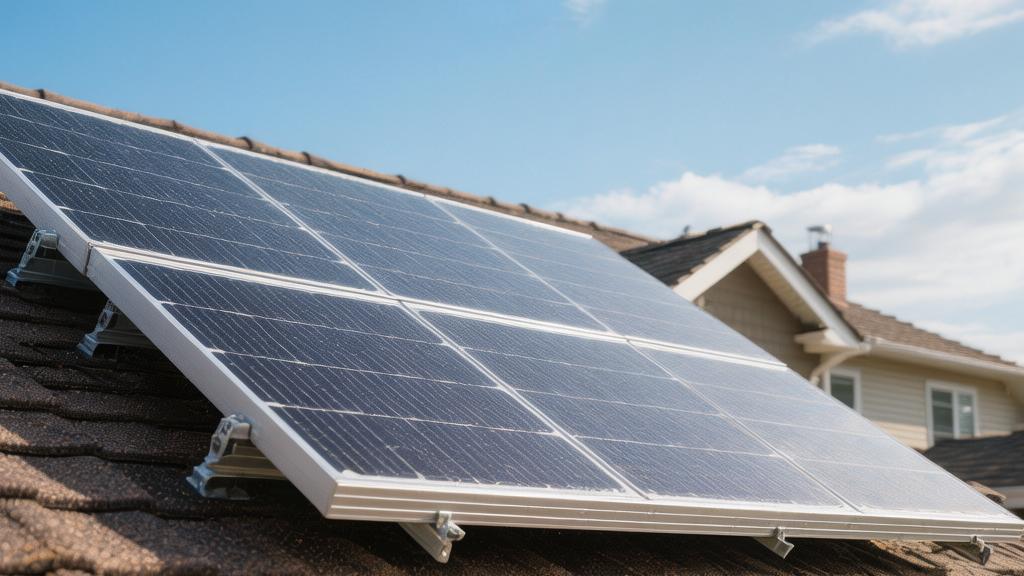
Affordability
Easy on the Budget
At current market levels, the production lines for 300W panels have long since passed the depreciation stage, which makes pricing highly transparent.
Right now, the cost per watt of this type of panel is typically about 15% to 20% lower than that of newer models designed for maximum output.
If you plan to build a 1.2 kW home backup system, buying four 300 W panels usually costs only $600 to $700. By contrast, if you go for two 600W high-efficiency panels, the premium pricing and shipping constraints often push the total cost past $850.
It is not just the panels themselves that save money. The matching mounting hardware and cabling also cost less. A 300W panel has a wind-exposed area of about 1.62 square meters, so the structural demands on the brackets are relatively low.
A standard aluminum Z-bracket set available on the market can secure one for under $20.
Because the operating current (Imp) is usually kept around 9A, you only need standard 4 mm² (12 AWG) DC cable, which costs just over $1 per meter.
If you switch to higher-current panels, the cable often has to be upgraded to 6 mm² or larger, which can immediately double the material cost.
Lower Shipping Costs
Logistics is a cost many buyers overlook, but for 300W panels, it is a major advantage. Their aspect ratio fits standard pallet transport especially well, and a 40-foot high-cube container can hold more than 800 panels.
For individual buyers, the 1.6-meter height fits into the back of most pickup trucks and even many SUVs. That means you can collect it from a local warehouse yourself and save $50 to $100 on last-mile delivery.
By comparison, large panels above 500W are usually over 2.2 meters long. Regular delivery vehicles often cannot handle them, so special forklifts and freight trucks are required.
The shipping damage rate for these oversized products is about 30% higher than for the 300W format, because the longer the panel, the greater the chance of microcracks forming during transport vibration.
The frame strength-to-area ratio of a 300W panel sits in a sweet spot. Even after long-distance shipping over thousands of kilometers, the intact delivery rate can still remain above 99.8%, which helps reduce the time cost of returns and replacements.
Easy-to-Find Parts
The electrical specifications of a 300W panel are almost tailor-made for the most common charge controllers on the market.
Its working voltage (Vmp) is usually in the 32V to 34V range, which means you can pair it with a matching MPPT controller at a very reasonable price.
A 30A MPPT controller costs around $60 and can easily support two 300W panels in parallel.
If you buy an ultra-high-power panel instead, matching its voltage and current may require a premium controller starting at $200, which is unnecessary for a small system.
For day-to-day maintenance, replacement parts for this format are everywhere. For example, the bypass diodes inside the junction box are usually three 15A or 20A Schottky diodes.
If one ever burns out from lightning or overload, you can buy a replacement for about $5 at almost any electronics parts store.
Versatility
Works with Just About Anything
A typical 300W monocrystalline solar panel usually has an open-circuit voltage (Voc) of about 39.5V, an optimum operating voltage (Vmp) of around 32.5V, and an operating current (Imp) of roughly 9.2A.
These parameters are an excellent match for the affordable MPPT charge controllers most widely available on the market. A controller rated for 100V input and 30A current usually costs under $70.
Users can connect two 300W panels in series. That raises the controller input voltage to about 65V, which is still safely within the 100V threshold, while the current remains at 9.2A.
This higher-voltage, lower-current transmission method allows you to run standard 4 mm² (12 AWG) PV cable over a distance of up to 15 meters between the panels and the controller while keeping voltage drop below 2%.
If you switch to high-power panels with working currents of 13A to 18A, the same distance would require more expensive 6 mm² or even 10 mm² cable, and a standard 30A controller would likely enter thermal protection frequently because of current overload.
Below is how 300W panels perform in three common installation scenarios:
System Type | Panel Configuration | Controller / Inverter Requirement | Average Daily Output (5 Hours of Sun) | Suitable Appliance Load |
12V off-grid system | 2 panels in parallel (600W) | 60A MPPT | 2,400 Wh (2.4 kWh) | 60W fridge + 100W TV for 3 hours |
24V off-grid system | 4 panels (2S2P, 1,200W) | 50A MPPT | 4,800 Wh (4.8 kWh) | 800W water pump for 1 hour + lighting |
Grid-tied microinverter system | 1 microinverter per panel | 300W microinverter | 1,200 Wh (1.2 kWh) per panel | Offsets daytime household standby loads |
Less Sensitive to Partial Shade
Whether it is an off-grid cabin near a wooded area or an RV parked under trees, partial shading is always a reality.
When 15% of a panel's area is shaded by leaves or a chimney, hotspot effects can cause the output of the entire panel to drop by more than 70% in an instant.
Inside a 300W panel, there are usually three electrical sections, separated by three bypass diodes rated at 10A to 15A, with each section carrying roughly 100W.
If bird droppings or a branch happen to shade the left third of the panel, the bypass diode for that section will automatically conduct, allowing current to flow around the blocked cells.
At that point, the remaining two-thirds of the panel can still continue delivering close to 200W of usable power.
In arrays with multiple panels connected in parallel, the smaller size of a 300W panel makes it easier to position modules more precisely around fixed shadows.
You can install panels on different sections of the roof—for example, two on the east side and two on the west side—to take advantage of different morning and evening sun angles, stretching the effective generation window to 8 hours and smoothing the system's output curve across the day.
Easy to Expand or Scale Back
For first-time users building a solar system, the budget is often limited. A user can spend just $150 on a 300W panel, then add a 100Ah deep-cycle cell and complete the initial setup for about $250.
Because the size and electrical specifications of 300W panels have remained largely standardized over the past five years, if you later decide to add an ice maker or an electric fan, you can easily find another panel with matching specs on the market.
All you need is a pair of MC4 Y-branch connectors costing about $5 to connect the old and new 300W panels in parallel.
The system's total power can be doubled from 300W to 600W in just 10 minutes.
Once connected in parallel, the combined current rises to 18.4A, but the original 30A controller can still handle it comfortably, with no hardware upgrade required.
This kind of modular expansion keeps the initial investment low and limits the cost of trial and error later on to little more than $50 worth of accessories.
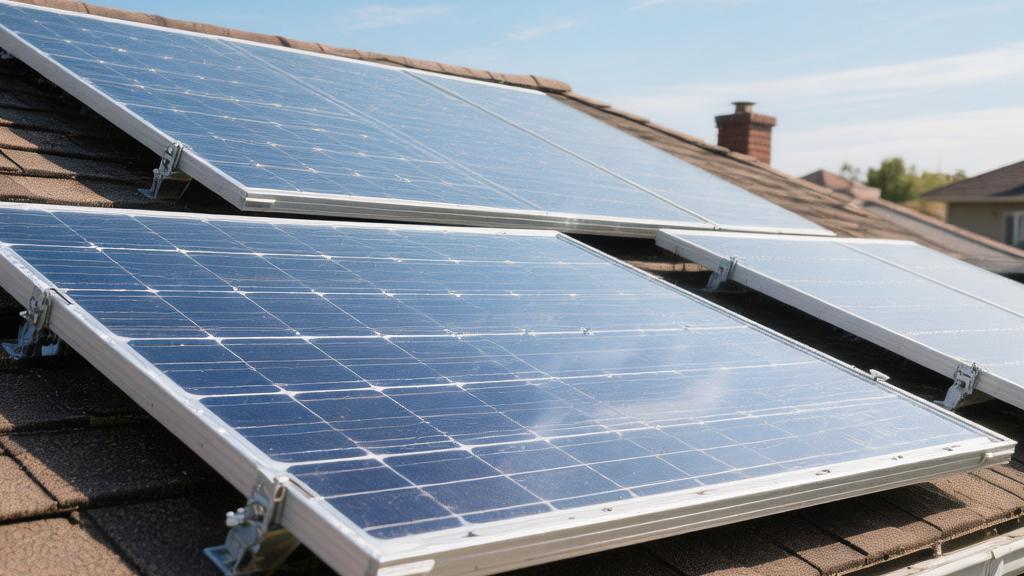
Daily Use
Enough for Basic Household Needs
Under standard test conditions (STC) with solar irradiance at 1,000 W/m², a 300 W monocrystalline panel gets about 5 peak sun hours per day.
Over that period, it can produce 1.5 kWh, or 1500Wh, of energy. For an off-grid cabin or a weekend getaway house, that amount of electricity can be allocated very clearly.
A 65W laptop running for 8 hours uses 520Wh, four 15W LED lights running for 5 hours at night consume 300Wh, and a 50W Starlink satellite receiver operating for 10 hours requires 500Wh.
That adds up to 1,320 Wh, which fits fully within the daily output of a single 300 W panel, still leaving an 11% energy margin to offset voltage drop from wiring losses.
If the user expands the setup to two panels in parallel, producing 3,000Wh per day, the system can easily support a 150W large-capacity double-door DC refrigerator running continuously for 24 hours, plus an 800W microwave used for 20 minutes per day.
For an average household during a power outage, the median minimum electricity required to maintain basic communication, lighting, and food refrigeration is usually between 2,200Wh and 2,800Wh.
A two-panel 300W + 300W setup lands squarely in that safe operating range.
According to sampled data from the U.S. Energy Information Administration (EIA), a small off-grid backup system producing 2.5 to 3 kWh per day can meet the basic electricity needs of more than 85% of households during the first 72 hours of a regional grid failure, significantly reducing the risk of food spoilage and communication loss.
Easy to Pair with Batteries
A 12V 100Ah LiFePO4 cell has a real nominal capacity of 1,280Wh.
When a 300W panel operates at its optimum voltage (Vmp) of 32.5V, it can deliver a peak charging current of up to 25A to the 12V cell side through an MPPT controller.
Based on the preferred 0.5C charging rate for LiFePO4 batteries—that is, 50A for a 100Ah cell—an input current of 25A falls within a very healthy 0.2C to 0.25C range.
At that current level, the temperature rise of the cell electrolyte usually stays within 8°C above ambient, and the risk of thermal runaway is essentially negligible.
It takes only about 4.5 to 5 hours of continuous sunlight to recharge a 100Ah cell from 90% depth of discharge (DoD) back to full.
If you instead use a single 600W panel to charge the same cell, the peak current can instantly rise to 50A or even 60A. Frequent high-rate charging like that can cut the cell's cycle life from its rated 3500 cycles to below 2000 cycles, raising the average storage cost per kilowatt-hour by 40% within two years.
Still Useful on Cloudy Days
In a typical cloudy or overcast environment, the solar irradiance reaching the ground usually drops from 1000 W/m² to only about 200 W/m² to 300 W/m².
Even under this low-light level—just 20% to 30% of standard conditions—a 300W monocrystalline panel still shows strong low-irradiance performance. Its open-circuit voltage (Voc) falls only slightly, by around 5% to 8%, and still remains above 35 V, which is enough to keep an MPPT controller awake and tracking.
Although the operating current drops significantly, a single panel can still produce 45W to 60W of real power per hour.
Across an 8-hour day of diffuse light, it can still collect around 360Wh to 480Wh.
A standard 12V compressor car refrigerator typically runs its compressor about 30% of the day, with an average daily power consumption of around 350Wh.
So, even if there is no direct sunlight for three straight days, the trickle charge collected by a single 300W panel under cloudy conditions can still just about offset the refrigerator's energy use, keeping the cell voltage near the healthy 13.2V baseline and preventing the cell bank from falling into a deep-discharge state.