How Do You Choose the Most Efficient Solar Panel
To choose the most efficient solar panels, prioritize monocrystalline silicon modules with a conversion efficiency of over 20% (such as N-type TOPCon technology).
The key is to look at three core metrics: Conversion Efficiency, top brands have now exceeded 22.5%, meaning more power generation for the same area;
Temperature Coefficient, lower values (such as -0.29%/℃) represent smaller power losses under high summer temperatures;
Degradation Rate, high-quality products have a first-year degradation of less than 1% and can provide a 25-year warranty with power retention above 85%.
Combining a comparison of Tier 1 suppliers' cost per watt and long-term power generation ensures that your photovoltaic system achieves maximum returns on a limited roof area.
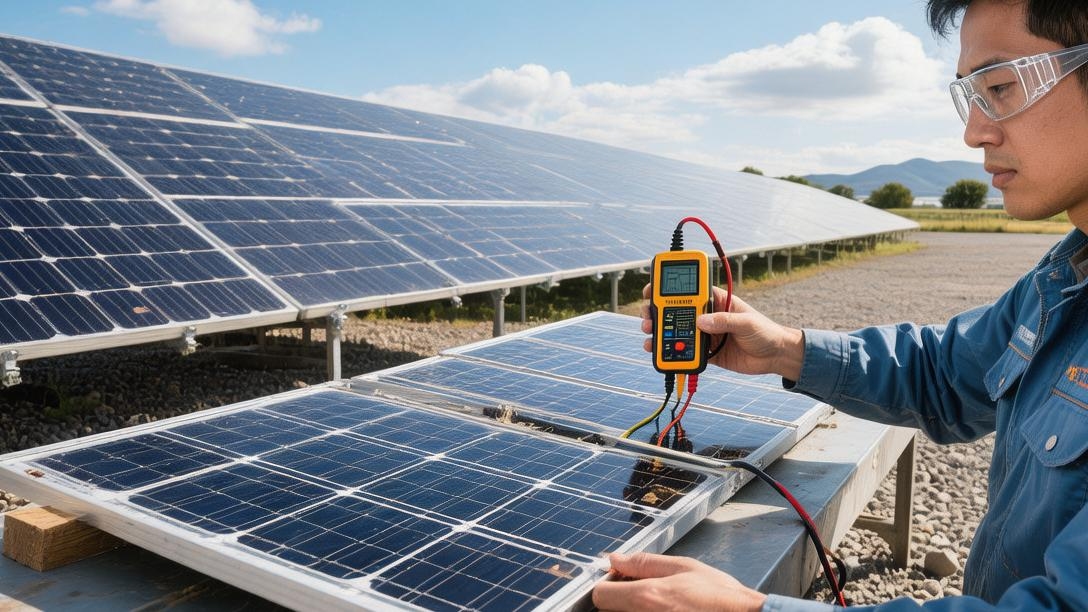
Space Vs. Power Output
Is There Enough Space
A 1722 mm by 1,134 mm 400 W monocrystalline silicon panel has a unit area of 1.95 m².
On a 100 m² flat roof, after deducting a 50 cm edge safety distance and a 10 cm gap between panels, a maximum of 42 modules of this specification can be placed.
If 400 W modules are upgraded to 580 W modules with an efficiency of 22.8%, although the single unit length increases to 2278 mm, the total power in the same area will soar from 16.8 kW to 20.3 kW, and the power density per unit area increases by 20.8%.
With a bracket arrangement at a height of 1.5 meters, a 30-degree tilt installation occupies 15% more projection area than a flat layout, but the total annual power generation will increase by 18% because it captures more oblique light.
Power Output Amount
When cell conversion efficiency increases from 20% to 23%, for the same 200 m² installation area, the total annual electricity production will increase from 32,000 kWh to 36,800 kWh.
Assuming a feed-in tariff of 0.12 USD per kWh, this 3% efficiency gap will bring 576 USD in additional annual income.
Within a 25-year linear power warranty period, low-efficiency modules typically reach a total degradation of 15%, while high-efficiency N-type modules can keep the degradation rate within 10.5%.
This 4.5% performance retention difference allows for an extra 12 kWh of daily power output by the 20th year of project operation, which is enough to run a 1.5-hp air conditioner for 8 hours.
Denser is More Cost-Effective
Modules using 210 mm silicon wafers usually have a short-circuit current around 18.5 A, which is about 3.5 A higher than the 182 mm specification.
When arranging series circuits, the total voltage per string of 18 modules will reach 800 V to 1000 V, requiring 4 mm² DC cables to reduce voltage loss by 2%.
If roof space is limited, choosing bifacial modules with a bifaciality of 85% can increase the actual output power of each panel by an additional 40 W to 60 W by utilizing 10% to 20% of the light energy reflected from the rear.
Assisted by white roof coatings, this layout can increase the system's ROI from 12% to 14.5%, shortening the payback period by about 10 months.
Leave Space for Ventilation
A ventilation gap of 10 cm to 15 cm must be reserved between the panels and the roof surface to ensure the cell operating temperature stays below 45 ℃.
For every 1 ℃ increase in ambient temperature, the power of standard modules decreases by 0.35%, while the loss rate for high-performance modules is only 0.29%.
On a hot summer day of 38 ℃, the internal cell temperature may reach 70 ℃. At this point, the 0.06% temperature coefficient difference results in a 1.2 kW power variation for a 20 kW system.
Since shading 5% of the area can cause a 90% drop in string current, bypass diodes must react within 0.5 ms during installation to protect the circuit from hot spot damage.
Is the Roof Heavy
The weight of a single dual-glass module is generally between 28 kg and 32 kg, equivalent to a unit load on the roof of approximately 15 kg/m².
Including aluminum alloy brackets and ballast blocks, the total load-bearing requirement reaches 25 kg/m² to 40 kg/m².
For light steel joist roofs with a load capacity of only 50 kg/m², the number of modules must be limited to within 25 for a 15 kW system, and 3.2 mm thick ultra-clear patterned tempered glass should be selected.
If a 1.6 mm + 1.6 mm thin dual-glass solution is chosen, the weight per panel can be reduced by 20%, allowing for 5 extra panels under the same weight limit, increasing total power by 2.8 kW.
Payback Period in Years
For a 10 kW high-efficiency PV system, current hardware procurement costs are about 4500 USD, and installation labor costs are about 1200 USD.
In areas with 1200 annual sunshine hours, the system generates 12,000 kWh per year. Calculated at a self-consumption electricity price of 0.15 USD, it saves 1800 USD in electricity bills annually.
After deducting 1% annual maintenance costs and 0.5% hardware depreciation, the static payback period for the investment is approximately 3.2 years.
If the system's life reaches 30 years, it will generate over 48,000 USD in pure cash flow between years 4 and 30, with the internal rate of return (IRR) typically remaining high at over 18%.
Temperature Coefficient
Sensitivity to Heat
Under standard test conditions (STC), the reference cell temperature is 25 ℃, but when the outdoor ambient temperature reaches 35 ℃ and solar irradiance is 1,000 W/m², the surface temperature of dark silicon wafers can quickly soar to 65 ℃.
This 40 ℃ temperature difference triggers the power degradation mechanism. The power temperature coefficient for standard P-type monocrystalline silicon modules is usually -0.38%/℃, which means for every 1 ℃ rise, the panel's output power decreases by 0.38%.
For a module rated at 550 W, under actual 65 ℃ operating conditions, its instantaneous output power will drop from 550 W to 466.4 W, a decrease of 83.6 W.
This 15.2% power loss is due to thermal interference with electron movement within the semiconductor material, causing the open-circuit voltage (Voc) to drop at a rate of 0.12 V per degree, directly affecting the maximum power point tracking efficiency of the string inverter.
Important Parameter Reference:
· Standard Temperature: 25℃
· Measured Operating Temperature Range: 45℃ - 75℃
· Voltage Drop Rate: Approx -0.3% / ℃
· Power Loss Ratio (P-type): -0.34% to -0.42% / ℃
Power Loss Amount
Comparing traditional P-type modules with new N-type TOPCon modules, the latter's temperature coefficient is optimized to -0.30%/℃. This 0.08% difference is particularly significant during a 40 ℃ temperature rise.
For the same 10 kW roof system, under extreme high temperatures of 70 ℃, the actual output of the P-type system is only 8.29 kW, while the N-type system maintains 8.65 kW. The extra 360 W of power is enough to drive a small ventilation device.
If the system spends 5 hours daily operating above 50 ℃, N-type modules can produce 1.8 kWh more electricity per day than P-type.
Accumulating over 200 sunny days per year, the annual generation difference will reach 360 kWh.
Based on an average electricity price of 0.18 USD/kWh, optimizing this single temperature coefficient parameter alone can increase the net income of a 10 kW power station by 64.8 USD per year.
This Type is More Stable
For power plant projects seeking extreme returns, Heterojunction (HJT) cells demonstrate superior thermal stability, with a temperature coefficient as low as -0.24%/℃, which is almost the limit of current mass production technology.
When ambient temperatures are in a 40 ℃ heatwave, the power generation gain of HJT modules compared to ordinary modules can reach around 3% to 5%.
In a 50 kW commercial rooftop project with a total investment of 50,000 USD, using modules with a -0.24%/℃ coefficient increases initial procurement costs by 8%, but because power output is higher during high-temperature seasons, the Levelized Cost of Energy (LCOE) can actually decrease by 0.005 USD.
This performance advantage is particularly prominent in tropical regions with 85% humidity and 32 ℃ temperatures, where the IRR is typically 1.2 percentage points higher than projects using conventional modules, shortening the payback period from 6.5 years to 5.8 years.
Data Comparison of Different Technical Routes:
· P-PERC: -0.37% / ℃ (Annual power generation loss baseline)
· N-TOPCon: -0.30% / ℃ (Gain approx 2.5%)
· N-HJT: -0.24% / ℃ (Gain approx 4.8%)
Calculate Returns
Over a 25-year operation cycle, the electricity gap caused by the temperature coefficient has a significant compounding effect, directly determining the asset's liquidation value.
Assuming two systems, both start at 100 kW, one with a coefficient of -0.39% and the other at -0.29%, in a region with 1500 annual sunshine hours, the system with the higher coefficient will produce about 2,250 kWh less per year due to heat loss.
The accumulated power gap over 25 years is as high as 56,000 kWh, equivalent to losing nearly 10,000 USD in cash inflow, which almost covers the replacement cost of the entire inverter and bracket system.
When evaluating second-hand power plant assets, for every 0.01% improvement in temperature coefficient, the asset evaluation premium is usually around 0.02 USD per watt, as it represents better risk resistance and stronger current stability, effectively reducing DC-side mismatch loss by 0.5%.
Cooling Methods
Physical installation methods also have a non-negligible impact on operating temperature. A 12 cm air layer between the module back and the roof can create a chimney effect, reducing operating temperature by 3 to 5 ℃.
For every 5 ℃ reduction, based on a -0.35%/℃ coefficient, system efficiency immediately recovers by 1.75%, which is cheaper than spending thousands of dollars upgrading to high-efficiency inverters.
For 210 mm large-size modules, since a single unit area is close to 3.1 m², the frame expansion due to heat is about 0.2 mm, so a 20 mm earthquake-resistant expansion joint must be reserved during installation.
If using pressure clamps, ensuring the contact area of each clamp is no less than 50 cm², can effectively disperse thermal stress, preventing cell micro-cracks larger than 15 microns during 70 ℃ cycling, thereby maintaining a linear power degradation of no more than 12.6% over 30 years.
Purchasing Advice
When checking datasheets, focus on comparing the specific temperature coefficients of Pmax, Voc, and Isc, where the Pmax coefficient accounts for over 90% of the impact on total returns.
If the project location's average summer temperature exceeds 30 ℃, it is recommended to use -0.32%/℃ as the selection baseline. Any product higher than this value will lead to over 5% electricity loss during hot months.
For modules using bifacial technology, the rear temperature coefficient is usually the same as the front, but because rear light intensity is only 10% to 20% of the front, its heat generation is lower, slightly lowering the overall average cell temperature by about 0.8 ℃.
When designing a 500 kW system, PVsyst software simulation reveals that optimizing the temperature coefficient from -0.38% to -0.31% can increase the annual equivalent utilization hours by 45 hours, directly increasing the project valuation by 3%.
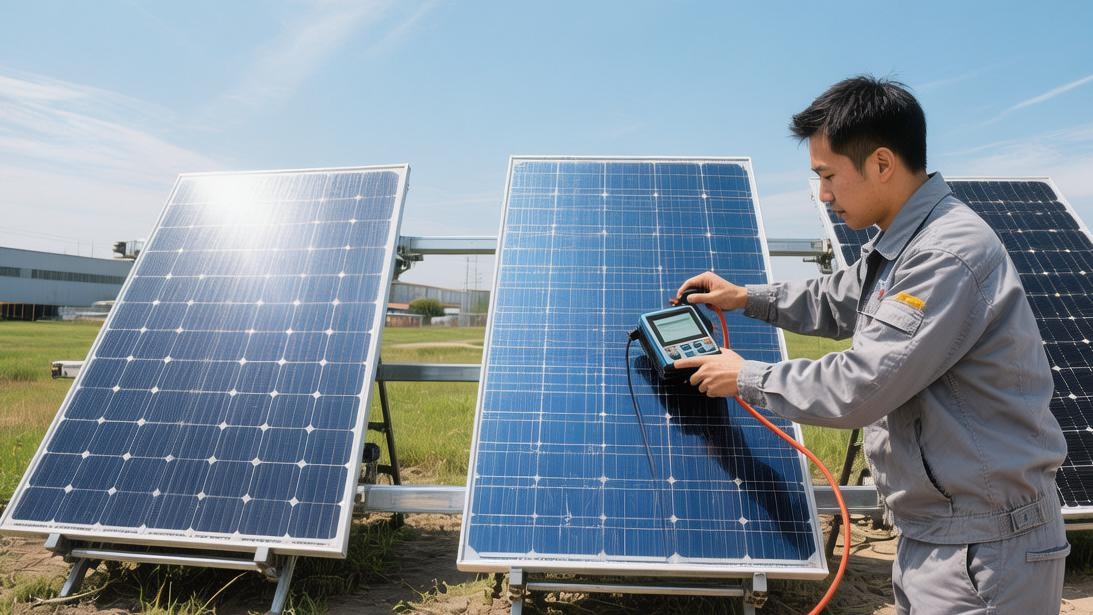
Long-Term Degradation & Warranty
How Long It Lasts
The physical lifespan of solar panels is usually set at 30 years, but their economic life depends on whether power output can be maintained at over 80% of the initial value.
Current P-type PERC modules experience Light-Induced Degradation (LID) during the first year of operation, causing power to drop instantly by 2% to 2.5%, meaning a 500 W panel's actual output limit becomes 487.5 W 12 months after installation.
In contrast, N-type TOPCon technology, due to phosphorus-doping, can control the first-year degradation rate to within 1%, or even reach a very low level of 0.8%.
This 1% initial difference in a 10 kW home system means producing about 150 kWh more in the first year.
Over time, Boron-Oxygen complexes, Potential Induced Degradation (PID), and Light and elevated Temperature Induced Degradation (LeTID) within the cells will continue to consume semiconductor activity, leading to huge discrepancies in output capacity after 25 years.
Annual Power Drop
In modules passing IEC 61,215 standards, the annual linear degradation rate is the decisive metric for ROI.
Average P-type modules have an average annual degradation rate of about 0.55% between year 2 and year 25, while high-quality N-type modules can keep it down to 0.4%.
Assume a 100 kW industrial/commercial rooftop project. Under 1300 equivalent utilization hours per year, a 0.15% degradation difference leads to an annual electricity gap increase of 195 kWh, which accumulates linearly over time.
By the 20th year, the total electricity production of an N-type system will be about 3.8% higher than a P-type system, equivalent to a net electricity gain worth 5000 USD without any extra brackets, cables, or land investment.
To cope with harsh environments, modules typically undergo 2000 hours of Damp Heat 85 tests (85 ℃ and 85% humidity) to ensure the peel strength of the backsheet and POE encapsulation material is not less than 5 N/cm, preventing moisture intrusion that leads to abnormal power drops over 5%.
Performance Parameter Comparison | P-type (PERC) | N-type (TOPCon) | Heterojunction (HJT) |
Max First-year Degradation | 2.0% - 2.5% | 1.0% | 1.0% |
Annual Linear Degradation | 0.45% - 0.55% | 0.40% | 0.37% |
Remaining Power After 30 Years | approx 80.0% | 87.4% | 88.0% |
Encapsulation Material | EVA/POE | Pure POE | Pure POE |
PID Resistance (1,000 h) | < 5% power loss | < 2% power loss | < 1% power loss |
Who Manages Repairs
Warranty terms consist of a product workmanship warranty and a linear power warranty. The former guarantees hardware won't break, while the latter ensures power generation meets standards.
Top brands in the market offer 12 to 15 years of product workmanship warranty, covering physical damage such as frame cracking, junction box diode failure, and glass breakage.
Some high-end brands increase the product warranty to 25 years to prove their manufacturing process, covering the time span of two inverter replacement cycles.
If a junction box's waterproof rating is lower than IP68, the probability of rainwater penetration increases by 15% over 10 years of outdoor exposure, potentially causing internal resistance to rise from 0.5 ohm to 5 ohms, resulting in over 10% power loss.
For a 30-year power warranty, it must be confirmed whether the manufacturer is insured by a third-party insurance company (such as Munich Re or Ariel Re) to prevent the warranty from becoming void if the manufacturer goes bankrupt after 20 years, which relates to a 15% valuation premium when power plant assets are traded on the secondhand market.
How Much Remains
By the end of the 25th year of project operation, the remaining power of high-efficiency N-type modules typically stays around 89.4%, while low-end modules may have slipped to 83.1%.
This 6.3% power difference represents an annual output gap of 80,000 kWh for a 1 MW small power station.
Calculated at a feed-in tariff of 0.12 USD/kWh, this annual cash flow loss reaches 9600 USD.
If using bifacial dual-glass modules, their 2.0 mm + 2.0 mm tempered glass structure effectively resists salt spray and ammonia corrosion, and their total power degradation within 30 years is usually 2% to 3% lower than single-glass modules.
Under 1000 V system voltage, if the module's anti-PID performance is poor, leakage current caused by negative bias can cause power to crash by 20% in just five years, turning the system from profit to loss.
Calculating the Money
The payback period calculation must deduct annual performance loss costs, with annual maintenance costs typically being 1% of the initial investment.
For a 5 kW residential system, if modules with a 0.4% degradation rate are chosen, the total power generation over 30 years is approximately 140,000 kWh.
If modules with a 0.6% degradation rate are chosen, total generation will shrink to 132,000 kWh, losing 8000 kWh in revenue.
Calculated at a retail electricity price of 0.2 USD, this means a potential economic loss of 1600 USD, far exceeding the 400 USD premium paid for high-efficiency modules.
Current cost per watt fluctuates between 0.11 USD and 0.15 USD. Every 0.1% increase in annual stability is equivalent to locking in a long-term value increase of 0.05 USD per watt for power plant assets.
When conducting 20-year loan financing, banks typically require that the module's linear degradation rate not exceed 0.7%, otherwise, they will raise the loan interest rate by 50 to 100 basis points to hedge against the repayment risk caused by insufficient power generation.