Why Consider When Choosing Between Photovoltaics and Solar Panels | 3 Factors
First, clarify whether the primary need is electricity or hot water;
Second, evaluate the roof area: a 5 kW photovoltaic (PV) system requires about 30 square meters, whereas a solar thermal collector only needs 4 square meters;
Third, compare efficiency: thermal collection conversion rates reach up to 70%, while PV is only about 22%.
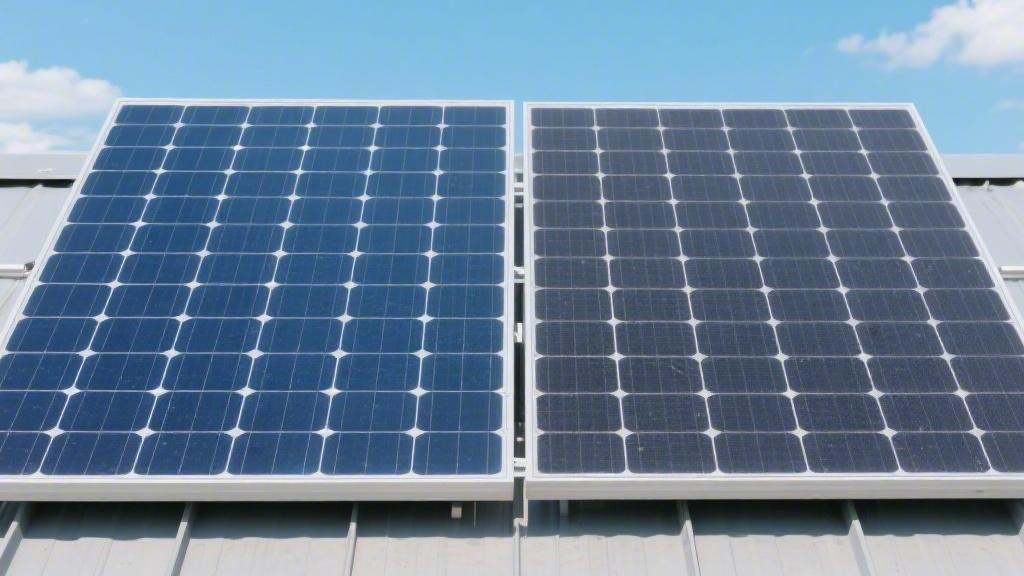
Primary Energy Need
Reviewing the Electricity Bill
The average American household consumes 893 kWh of electricity per month, with air conditioning and electric heating equipment typically accounting for 45% to 50% of the total consumption. Reviewing the billing details over the past 12 months to identify peak usage during the summer (July to August) and winter (December to January), the figures often break the 1,200 kWh mark. If the average electricity rate reaches $0.16 per kWh, the monthly expenditure to keep these appliances running will exceed $142.88. For a residence consuming 10,716 kWh annually, installing a solar PV array with a total capacity of 6.5 kW can generate approximately 11,862 kWh of electricity per year under an average of 5 hours of effective daily sunlight. This installation scale requires 16 monocrystalline silicon modules rated at 400 watts each, occupying about 32 square meters of roof area.
l A central air conditioner with an operating power of 3,500 watts, running for 8 hours a day, consumes 28 kWh daily, which accounts for 86.1% of the 32.5 kWh daily power generation of a 6.5 kW PV system.
l A 7,000-watt Level 2 home EV charger, replenishing 28 kWh over four hours of charging each night, requires an additional setup of at least seven 400-watt solar panels to maintain the supply-demand balance.
l A traditional electric water heater with a 300-liter capacity and a 4,500-watt power rating takes 2.5 hours to heat water from 15°C to 60°C, consuming 11.25 kWh of electricity per cycle.
Calculating the Hot Water Bill
The thermal energy demand from showering, laundry, and dishwashing in a standard family of four typically requires about 227 to 300 liters of total water per day. Elevating the temperature of 250 liters of tap water by 45°C requires approximately 13.08 kWh of energy, as dictated by the laws of physical thermodynamics. By utilizing flat-plate solar collectors with a thermal efficiency of up to 75%, an absorbing coating area of 2.5 square meters can absorb and convert 14 kWh of thermal energy within 3 hours under an irradiance of 800 W/sqm. A system comprising two 2-square-meter collector plates and one 300-liter insulated storage tank costs roughly between $4,500 and $6,000 in total for hardware and installation. In contrast, using PV generation to power an electric water heater to produce the same 13.08 kWh of thermal energy would require three 450-watt solar panels operating continuously at full load for 10 hours, factoring in the 95% conversion efficiency loss of the inverter and a 3% resistance loss in the wiring.
l When regions above 40 degrees north latitude enter winter, daily sunshine duration drops to less than 4 hours, and ambient temperatures fall to -5°C. Under these conditions, the water temperature in a solar thermal system usually only reaches 35°C, relying on a built-in 3,000-watt backup electric heating element to compensate for the remaining 25°C temperature gap.
l Evacuated tube collectors have a heat loss rate of less than 5% in -10°C environments, making them 20% more efficient at retaining water temperature than flat-plate collectors. They are suitable for residences in cold climate zones with over 3 months of freezing periods annually.
l The pump circulation system consumes between 0.5 kWh and 0.8 kWh of electricity daily. Calculated at $0.16/kWh, the annual supplementary electricity cost to maintain the operation of the solar thermal equipment is only $29.20 to $46.72.
Comparing Returns
According to installation quotation data from the first quarter of 2025, the average unit price for residential PV systems in the North American market ranges between $2.85/W and $3.25/W. Investing $17,100 to build a 6 kW pure power generation array, calculated at a 1.5% degradation rate in the first year and a 0.5% annual degradation rate thereafter, will cumulatively produce about 185,000 kWh of electricity over a 25-year lifecycle. Discounted at an average annual electricity price growth rate of 2.5%, the cumulative 25-year net monetary gain of this 6 kW generation system is expected to reach $42,500, with an internal rate of return (IRR) of 11.4%.
Installing a solar thermal plate system equivalent to generating 15 kWh of heat per day with an initial budget of $5,000 to replace an electric water heater with an energy efficiency ratio of 0.9 can save 5,500 kWh of purchased electricity annually. The first-year bill savings amount to $880, allowing the full recovery of hardware and labor costs in just 5.68 years. However, between the 12th and 15th years, $400 to $600 must be spent on moderate maintenance due to antifreeze deterioration and the aging of silicone modules.
l By utilizing the 30% Investment Tax Credit (ITC) offered at the federal level, the actual net cash outflow for the $17,100 PV project drops to $11,970, shrinking the payback period from 8.5 years to 5.9 years.
l A hybrid PV system equipped with an 8 kWh lithium iron phosphate (LiFePO4) cell requires an additional budget of $6,500. With up to 6,000 charge-discharge cycles, it can sustain a 500-watt refrigerator and four 15-watt LED lights continuously for 24 hours during a power outage.
l If the portion of pure heating-related costs in the electricity bill is below 20%, the return on investment (ROI) for a solar thermal system drops below 6%. In this scenario, replacing the same roof area with N-type TOPCon solar panels featuring a 22.5% conversion efficiency would generate 1.2 times more economic value.
Assessing Idle Space
Evaluating the dimensions of the load-bearing surface is the physical prerequisite for determining the configuration ratio. An unshaded pitched roof with 60 square meters of usable area can accommodate up to 28 standard modules measuring 1722 mm × 1,134 mm. These 28 panels can provide a peak DC output of about 11.2 kW, generating approximately 11 kWh of electricity per hour under an irradiance of 1,000 W/sqm. When 15% of the lighting area on this 60-square-meter space is shaded by a chimney with a 35-degree steep tilt or surrounding 15-meter-tall trees, a string inverter system will cause the overall power generation to drop by at least 25%.
Individual solar thermal modules typically weigh over 75 kg, exerting a static pressure of 40 kg to 55 kg per square meter on the roof. This is significantly higher than the load intensity of monocrystalline silicon PV panels, which is 15 kg to 18 kg per square meter. An integrated solar water heater equipped with a 120-gallon insulated water tank weighs up to 580 kg when fully filled with water, and must be installed above a structure supported by load-bearing wooden beams with a cross-section of 100 mm × 100 mm.
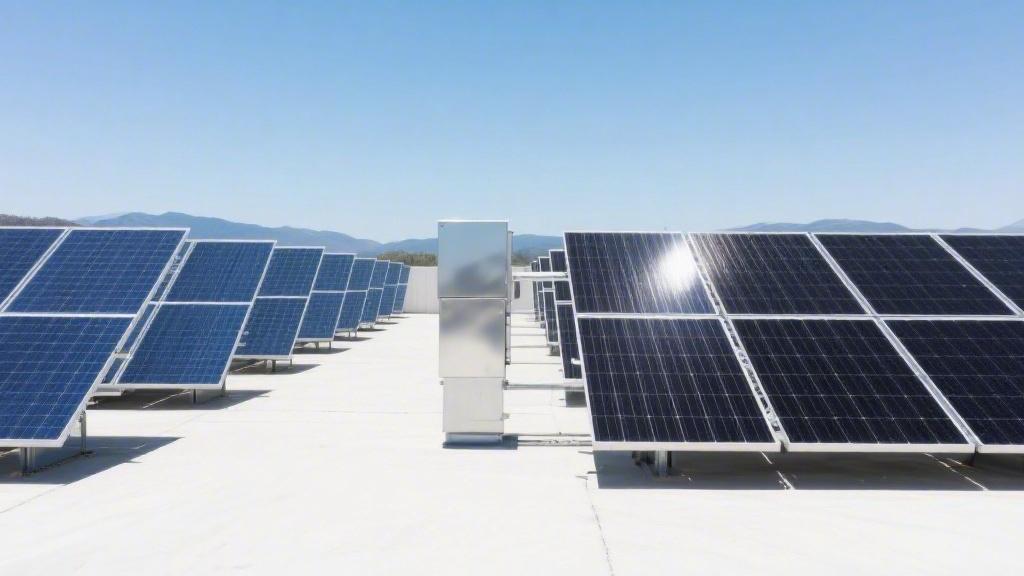
Available Space
Measuring the Roof
Evaluating the usable projected area on the top of the building plays a decisive role in determining the maximum installation capacity. The median footprint of a single-family home in North America typically reaches 160 square meters. After deducting the physical space occupied by skylights, ventilation ducts, and chimneys, the effective installation area usually follows a normal distribution between 70 square meters and 110 square meters. A single N-type bifacial half-cut module with an output power of 420 watts has fixed dimensions of 1722 mm in length and 1,134 mm in width, occupying 1.95 square meters of physical space.
Arranging 30 modules of this model on a pitched roof set at a 25-degree tilt will consume 58.5 square meters of net area, forming a total installed capacity of 12.6 kW. If the system operates under standard test conditions (1,000 W/sqm irradiance, 25°C cell temperature), this matrix will output 12.6 kWh of electricity per hour. To meet fire safety regulations, a clear pathway of at least 0.9 meters must be maintained along the roof ridge and both eaves, causing the actual usable laying ratio to drop from a theoretical 100% to a range of 72% to 78%.
According to the International Residential Code (IRC) requirements, the standard deviation of the setback distance from the edge of the PV array to the roof ridge must not deviate from the allowable plus or minus 5 centimeters. When the array coverage exceeds 33% of the total roof area, two fire-access pathways with a width of no less than 91.4 centimeters must be cleared. This mandatory isolation zone can cost a single-sided roof up to 4.5 kW of potential installed capacity.
Calculating Load-Bearing Capacity
The dead weight of the equipment and the additional environmental loads constitute the evaluation metrics for the roof structure's strength. Traditional asphalt shingle roofs are designed to withstand a static load range of 73 kg to 97 kg per square meter. A standard silicon-based PV panel weighs a consistent 21.5 kg, and the accompanying aluminum alloy rails, stainless steel fasteners, and microinverters add an extra 4.5 kg per square meter, bringing the overall distribution density of the PV system to 15.5 kg per square meter. The weight distribution of a flat-plate solar thermal system exhibits a high degree of unevenness. Although the thermal plate itself weighs about 45 kg, its paired 80-gallon (about 302-liter) dual-loop insulated storage tank will see its total weight soar to 365 kg when filled with propylene glycol antifreeze and domestic water. Placing such a massive concentrated load on a wooden truss occupying less than 1.5 square meters creates a pressure of 243 kg per square meter.
In extreme weather with wind speeds reaching 193 km/h, the negative wind pressure sustained by a rooftop PV array generates an upward uplift force of up to 146 kg per square meter. When snow accumulation reaches a thickness of 40 cm, the positive snow load will press down on the roof frame with a gravity of 195 kg per square meter, requiring the yield strength limit of the building's wooden beams to exceed 24 megapascals.
Measuring the Shading Rate
When a 12-meter-tall oak tree casts its shadow on a string PV matrix at 3 PM, covering 9% of the solar cells' total area, the entire string's output current will be restricted to the lowest value due to the activation mechanism of the bypass diodes, causing the array's total power to plummet by 35% to 45%. Solar thermal utilization systems are relatively less sensitive to shading. Shading 10% of the collector tube's surface area will only cause a proportional 10% decline in the thermal absorption rate, without triggering an exponential efficiency drop in the system. Using a 3D digital elevation model created via drone aerial photography can calculate the annual hours of unshaded sunlight on the roof. In areas where the probability distribution of sunlight falls below 75%, installing PV panels at a cost of $2.9/W will stretch the capital payback period drastically from 6.5 years to 11.3 years.
Ambient temperature exerts completely opposite physical effects on the conversion efficiency of different devices. The median temperature coefficient of monocrystalline silicon modules is approximately -0.34%/°C. When the summer roof temperature climbs from 25°C to 65°C, the photoelectric conversion efficiency faces an absolute loss of 13.6%. Conversely, for the selective absorbing coating inside an evacuated tube solar water heater, the heat conduction rate of the working fluid increases by 18% in a 65°C environment.
Leaving Ventilation Gaps for Heat Dissipation
The volume of the air circulation layer on the back of the PV panels determines the efficiency of passive heat dissipation. Regulations require a convection gap of 10 cm to 15 cm between the module frame and the roof tiles to ensure that when the wind speed reaches 2.5 meters per second, 60% of the accumulated heat on the back is carried away. If flush-mounted, every 10°C increase in the backsheet temperature accelerates the aging rate of the ethylene-vinyl acetate (EVA) encapsulant film, reducing the theoretical 25-year lifespan to 18 years. The installation tilt angle tolerance for solar thermal collectors is even lower. To capture maximum low-angle solar radiation in winter, collector tube matrices with reflectors usually need to be fixed at an elevation angle precisely equal to the local latitude plus 15 degrees via adjustable triangular brackets. In a region at 42 degrees north latitude, the installation elevation angle needs to reach 57 degrees.
A 10-degree deviation of the tilt parameter from the optimal median value will result in a 4.8% reduction in the annual average received radiation. The high-elevation installation posture significantly increases the physical cross-sectional area of the equipment's windward side, pushing the drag coefficient from 0.8 up to 1.4. This demands that the pull-out resistance test value of the roof's embedded parts exceed 5,000 Newtons; otherwise, it faces an extremely high probability of structural tearing.
Maintenance and Climate Suitability
Calculating Maintenance Fees
The median daily operational expenditure for residential PV systems remains within the range of $18 to $25 per kW annually. This includes $150 for a single drone-assisted infrared thermal imaging inspection and string-level circuit insulation resistance testing. As the hub for alternating current interaction between silicon-based modules and the grid, the inverter's Mean Time Between Failures (MTBF) usually ranges from 10 to 15 years. Replacing a 7.6 kW rated single-phase inverter outside the warranty period will incur a bill of $1,800 to $2,200, including labor costs.
Statistical samples show that over 75% of inverter failures originate from the aging of capacitors in the DC-side overvoltage protection circuit. A natural power degradation rate of 0.5% per year for the modules will cause the overall generation efficiency to drop to 82.6% of its initial rated value by the end of its 25-year lifecycle. System maintenance expenditures will exhibit obvious peak fluctuations in the 10th and 20th years, while the standard deviation for the annual maintenance budget over the first 9 years is merely plus or minus $12.
Closed-loop solar thermal systems with ethylene glycol antifreeze require a working fluid pH test and a full-system flush every 3 to 5 years. When the pH value of the antifreeze drops below 7.0, the solution becomes acidic and will corrode the copper pipe walls at a rate of 0.1 mm per year. A single service call to replace 30 liters of antifreeze and recalibrate the system pressure costs between $350 and $450 in labor. The consumption speed of the magnesium sacrificial anode rod inside the storage tank depends on the hardness and calcium ion concentration of the local tap water. In areas where water Total Dissolved Solids (TDS) exceed 200 mg/L, $80 must be spent every 24 months to replace a 1.2-meter-long anode rod to prevent an increased probability of inner tank perforation and rupture.
Withstanding Extreme Cold
When the ambient temperature plummets to -20°C, the open-circuit voltage of PV modules will climb inversely in accordance with the physical property of a -0.28%/°C temperature coefficient. For an array composed of 12 monocrystalline silicon modules connected in series, each with a maximum operating voltage of 41.5 volts, the loop's total voltage will spike from the standard 498 volts to 586 volts. The system design end must reserve at least a 20% voltage safety margin to avoid breaching the inverter's 600-volt input limit, which would trigger a hardware-level breakdown short circuit.
Actual test data from snowy climate zones indicates that when PV panels with a tilt angle of less than 30 degrees are completely covered by 15 cm of snow, the probability of daily power generation loss reaches 100%. The snow reflectance (albedo) can reach 0.8, but without snow-clearing intervention, one must either wait for the ambient temperature to rise or use a 6-meter telescopic pole with a soft edge for physical removal. The average cost of hiring a professional for a single session ranges from $150 to $250.
Even if the outside temperature is -30°C, as long as a solar irradiance of 800 W/sqm is maintained, the selective absorbing coating at the bottom of the inner tube can still heat the thermal medium to over 90°C. When the pumping pressure reaches 2.5 bar, the antifreeze circulation fluid can transport thermal energy to the indoor insulated water tank at a flow rate of 4 to 6 liters per minute. The standard deviation fluctuation of winter thermal efficiency generally does not exceed plus or minus 5%.
Resisting Thermal Degradation
In desert or subtropical climate zones south of 30 degrees north latitude, summer rooftop ambient temperatures can easily break through 65°C at noon. N-type TOPCon PV panels operating at this extreme temperature will experience a 11.6% drop in actual output power compared to the 25°C standard test condition. The maximum peak power of a single 400-watt rated panel will be suppressed to around 353.6 watts, causing the overall monthly system power output in July and August to deviate from the theoretical peak prediction curve by about 15% to 18%.
High-temperature environments will also cause thermal degradation of the EVA film on the back of the PV panels. Once the cumulative ultraviolet irradiation dose exceeds 150 kWh per square meter, the probability of yellowing increases by 1.2% annually, causing the light transmittance of the solar cells to drop and the series resistance to rise by 0.02 ohms.
Flat-plate solar water heaters face the opposite pressure challenge during scorching summer seasons. When the 300 liters of domestic water in the tank has already reached the set threshold of 85°C, while the rooftop collector continues to receive solar radiation exceeding 950 W/sqm, the system will enter a stagnation state. Liquid molecules of the residual antifreeze in the pipes will rapidly vaporize, and volume expansion will cause the internal pressure of the loop to climb from a standard 2.0 bar to 6.0 bar within 15 minutes. The frequency of the safety pressure relief valve being forced open will significantly increase, and frequent activation will shorten the fatigue life of the spring modules. Replacing a Temperature & Pressure (T&P) relief valve with dual sensing capabilities costs between $120 and $180. Excessive boiling of the working fluid leads to the breakage of propylene glycol molecular chains, accelerating the degradation rate of antifreeze performance by 30%.
Reviewing the Data Sheet
To quantify the operational and maintenance costs as well as climate adaptability variables of both devices throughout their lifecycles, we extracted maintenance frequency, spare parts pricing, and environmental resistance parameters into a standard control group.
Evaluation Parameter Dimension | Silicon-Based PV Module System | Traditional Solar Thermal Collector System |
Equipment Inspection Frequency | Once / 24 months | Once / 12 months |
Median Price for Single Maintenance | $150 - $200 | $350 - $450 |
Major Module Replacement Cycle | 10 - 15 years (Inverter) | 3 - 5 years (Antifreeze / Anode Rod) |
Hail Impact Resistance Standard | 25 mm diameter, 23 m/s | 20 mm diameter, 15 m/s |
Operating Temperature Range | -40°C to +85°C | -25°C to +90°C (Depending on antifreeze) |
Temperature Power Coefficient | -0.28% to -0.35% / °C | Positive gain at high temps, sharp heat loss increase in extreme cold |
Static Snow Load Limit | 5400 Pascals (550 kg/sqm) | 3000 Pascals (306 kg/sqm) |
25-Year Total O&M Budget | $2,500 - $3,500 | $4,800 - $6,500 |
By calculating the dispersion and standard deviation in the matrix above, the variance in maintenance capital expenditures for a PV system during its first 10 years of operation is extremely small, presenting a statistical distribution of high initial investment but low subsequent costs. The cash outflow curve for a solar water heating system, however, shows clear cyclical fluctuations, with a consumption peak of $300 to $500 appearing roughly every 4 years. In extreme weather zones prone to hail with average wind speeds reaching 25 m/s, the 3.2 mm thick low-iron tempered glass covering the PV panels can withstand a physical impact of 1.9 joules of kinetic energy, with a shatter probability of only 0.03%. Under the same test conditions, the breakage rate for evacuated tube collectors using standard borosilicate glass rises to 1.5%, requiring the additional installation of a metal protective mesh with 85% light transmittance to reduce the loss rate brought by meteorological risks.