How are solar panels wired in a panel?
Solar panels wire via series (boost voltage, e.g., 40V/panel to 400V for 10-panel strings, cutting transmission loss) or parallel (raise current, keeping voltage steady), using MC4 connectors in junction boxes for weatherproof, efficient power collection.
Basic Parts of a Solar Cell
A standard residential solar panel, measuring about 1.7 meters tall by 1 meter wide, typically contains 60, 72, or 144 of these individual cells. At the heart of each cell is a thin wafer of highly purified silicon, about 160 to 180 micrometers thick – roughly the width of a human hair. This silicon isn't just any silicon; it's specially engineered to create an electric field, which is the absolute core of how sunlight gets converted into usable electricity. The entire multi-billion-dollar solar industry hinges on the precise physics and materials science within this small, 15.6 cm x 15.6 cm square.
The most critical part of the cell is the silicon wafer, which is purified to an exceptional grade of 99.9999% (known as "solar-grade" silicon). Pure silicon on its own isn't a great conductor; it's a semiconductor. To make it useful, we intentionally introduce impurities in a process called "doping." This creates two distinct layers within the wafer. The bottom layer is doped with an element like phosphorus, which adds extra electrons, creating a negative charge; this is the N-type (Negative-type) layer. The top surface, only about 0.3 to 0.5 micrometers deep, is doped with boron, which creates a deficiency of electrons, or "holes," resulting in a positive charge; this is the incredibly thin P-type (Positive-type) layer. The boundary where these two layers meet is called the P-N junction. This junction is not a physical part but a powerful electric field that acts like a one-way gate for electrons. When photons from sunlight hit the silicon, they knock electrons loose. The electric field at the P-N junction then pushes these freed electrons in one specific direction, creating a flow of direct current (DC) electricity. The strength of this electric field is typically around 0.5 volts per cell, regardless of its size.
A typical cell might have 90 to 120 thin fingers and 12 to 16 busbars on its front. The fingers collect the electrons and channel them to the busbars. The resistance in these lines causes a small voltage drop, usually less than 1-2% of the cell's total potential output.
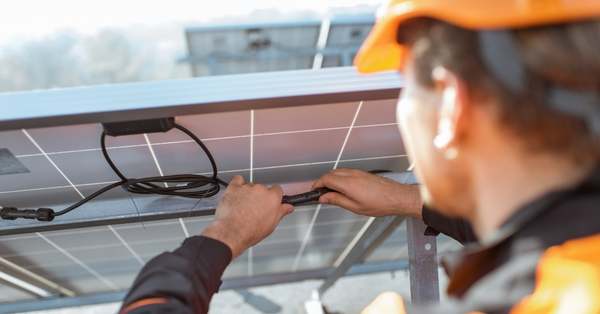
Connecting Cells into a String
With a nominal voltage of just 0.5 to 0.6 volts and a maximum power current of around 6 to 10 amps (depending on cell size), a single cell is insufficient for practical use. You would need to connect several dozen of them just to charge a small cell. To create a useful voltage, solar cells are connected end-to-end, in a series circuit, to form what is known as a "string." This process is fundamental to every solar panel's operation. Think of it like connecting 10 standard 1.5-volt AA batteries in a positive-to-negative line to get a combined 15-volt output.
These ribbons are typically 1.5 mm to 6 mm wide and about 0.1 mm to 0.2 mm thick. The connection process is highly automated. In a typical 60-cell panel layout, cells are arranged in 6 columns of 10 cells each. An automated machine applies a flux and then uses a soldering iron heated to approximately 300-400°C to solder the ribbons from the back of one cell to the front busbars of the adjacent cell. This creates an unbroken electrical path. The electrical principle here is straightforward series circuitry: voltages add up, while current remains the same. If each of the 10 cells in a single column produces 0.6 volts, the entire string will generate approximately 6 volts. The current flowing through that string, however, is limited by the cell with the lowest output, a critical factor we'll explore later. The total length of tabbing wire used in a single panel can easily exceed 4 to 5 meters.
The primary reason for creating series strings is to achieve a high enough voltage to efficiently power an inverter. Most household microinverters and string inverters are designed to start operating at voltages around 25-30 volts and reach peak efficiency at voltages over 300 volts. A single cell's 0.6 volts is practically useless for this purpose.
The tabbing wire itself has a small but measurable resistance, often in the range of 0.001 to 0.005 ohms per inch. Over the 10 to 20 inches of ribbon connecting cells in a long string, this can lead to a power loss of 0.5% to 2%, which manifests as heat. To minimize this, manufacturers use ribbons with a high conductivity rating and optimize the soldering process to ensure a low-resistance connection, typically aiming for a contact resistance of less than 1 milliohm per joint. The alignment of these ribbons is also critical; a misalignment of even 1 mm can shade part of the cell's active area, reducing its current output by 1-3%.
Arranging Strings in Parallel
If one cell in a 20-cell string is shaded, the power output of the entire string can drop by 30-50% or more. To build a robust and powerful solar panel, manufacturers connect multiple series strings together in parallel.
Inside a common 60-cell panel, the cells are almost always divided into 3 separate series strings, each containing 20 cells. Each of these strings operates independently. The positive end of each string is connected to a common positive busbar, and the negative end to a common negative busbar. The fundamental electrical rule of parallel circuits applies here: voltage remains constant, while currents add together. If each 20-cell string produces an open-circuit voltage of roughly 12 volts and a current of 10 amps under full sun, then connecting the 3 strings in parallel will maintain the system voltage at approximately 12 volts, but combine the current to a total of 30 amps. This is a critical design choice. A 12V-class panel is compatible with many common 12V batteries and charge controllers, whereas connecting all 60 cells in one long series string would create a 36V panel, which is less versatile for consumer applications. The cross-sectional area of the common busbars that collect this combined current must be significantly larger—often 2 mm² to 4 mm²—to handle the 30-amp flow without excessive resistive heating, which can waste over 1-2% of the panel's power as heat.
The following table compares the key characteristics of the series and parallel portions of the wiring:
Feature | Series String (e.g., 20 cells) | Parallel Array (e.g., 3 strings) |
Voltage | Sum of individual cell voltages (e.g., ~12V) | Equal to the voltage of one string (~12V) |
Current | Equal to the current of the weakest cell (e.g., ~10A) | Sum of the currents from all strings (e.g., ~30A) |
Shadow Impact | Severe: A shadow on 1 cell can disable the entire string. | Mitigated: A shadow on one string only affects that string's current contribution. |
Failure Mode | An open circuit in any cell stops all current flow in the string. | An open circuit in one string stops its current, but the other strings continue operating. |
However, the other 2 strings continue to operate at their full capacity, delivering power. Without this design, a single shaded leaf on a 60-cell panel could cut its output by 90-100%. With 3 parallel strings, the same leaf might only cause a 33% power reduction. This configuration is physically implemented using wider busbars that run perpendicular to the tabbing wires inside the cells. The connection points where each string meets the main busbars are critical junctures. These are often reinforced with extra solder or welded contacts to ensure a resistance of less than 0.0005 ohms. The entire parallel network then feeds into the panel's junction box, where the combined 30-amp current is directed to the output cables, which themselves must be thick enough (typically 4 mm² to 6 mm² cross-section) to handle the load with minimal loss, which is typically specified to be under 1.5% at the panel's maximum power point.
Role of the Bypass Diode
A single shaded or faulty cell can overheat catastrophically, causing permanent damage. This is not a minor issue; a shadow covering just 2% of a panel's surface can slash power output by over 80% if the panel lacks proper protection. The culprit is the series connection itself. In a string of 20 cells, all carrying the same 8-10 amps of current, a shaded cell cannot produce as much current as its fully-lit neighbors. This forces the shaded cell into a state called "reverse bias," where it acts like a resistor, dissipating power as intense heat that can raise its temperature to over 150°C (302°F) in a matter of minutes, potentially cracking the glass or starting a fire.
A bypass diode is a semiconductor device, typically a PN junction silicon diode housed in a small, dark plastic package about 5 mm long and 2 mm in diameter. Its core function is to act as a one-way valve for electricity. Under normal operation, when the voltage in the string is higher than the voltage required to "turn on" the diode (its forward voltage, typically ~0.7 volts), the diode remains inactive, presenting a very high resistance of over 1 megaohm. It is effectively invisible to the circuit. The critical change occurs when a cell or group of cells becomes compromised. If the current from the good cells tries to force its way through a failing cell, a voltage difference of 10 to 15 volts can build up across that cell. Once this reverse bias voltage exceeds the diode's turn-on threshold, the diode instantly switches to a low-resistance state (less than 0.01 ohms), activating in under 100 nanoseconds.
·
Preventing Hot Spots: By providing a low-resistance path, the diode allows the full string current (e.g., 10 amps) to bypass the failing group of cells. This prevents the shaded cell from dissipating destructive power, which could be as high as 100-150 watts (10A x 15V) without a diode. This power dissipation is what creates the damaging "hot spot."
·
·
Minimizing Power Loss: While the diode saves the panel from damage, it does cause a temporary power loss. The voltage of the entire subgroup of cells it bypasses is lost. In a panel with 3 diodes, each protecting a subgroup of 20 cells, bypassing one subgroup reduces the panel's voltage by approximately 33%.
·
Modern panels integrate 3 bypass diodes as a standard for a 60-cell configuration. Each diode is connected in parallel (but in reverse polarity) to a subgroup of 20 cells. These diodes are housed within the panel's junction box on the backside, where they are also responsible for handling heat. When conducting 10 amps of current, a single diode will itself dissipate about 7 watts of heat (10A x 0.7V). Therefore, the junction box is designed as a heat sink, often made of an aluminum alloy with a surface area of over 100 cm², to keep the diode's junction temperature within its safe operating range of -40°C to 150°C. The presence of functional bypass diodes is so critical that their failure can reduce a panel's peak power output by the 33% associated with each subgroup and, more importantly, eliminate the protective feature, putting the entire panel at risk of thermal damage over its 25-year lifespan.
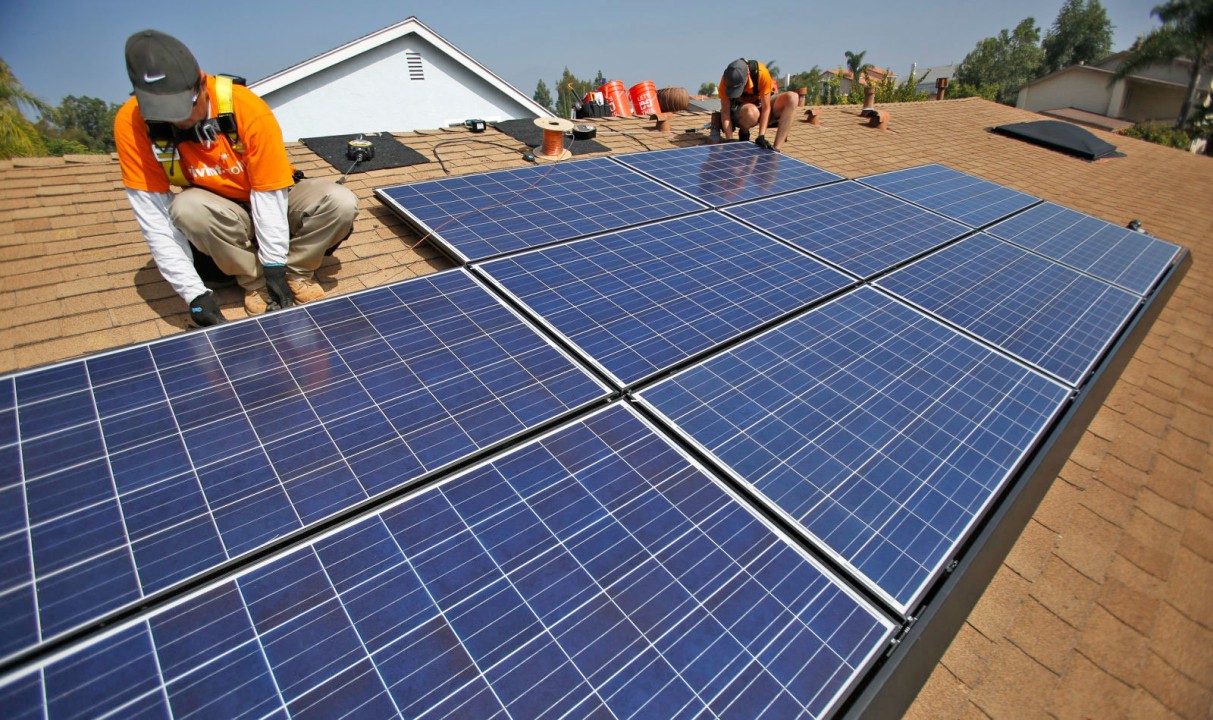
Understanding the Junction Box
The intricate network of cell strings and bypass diodes inside a solar panel ultimately converges at a single, critical point: the junction box. This unassuming plastic or metal box, typically measuring about 12 cm x 8 cm x 2 cm, is permanently bonded to the backsheet of the panel, usually 10-15 cm from its edge. It serves as the panel's central nervous system and its only interface with the outside world. Within this small enclosure, the combined DC power—which can reach 400 watts, 40 volts, and 10 amps for a residential panel—is consolidated and directed outward. More importantly, the junction box houses the essential protective electronics that ensure the panel's 25-year operational lifespan by managing extreme conditions.
The primary functions of the junction box can be broken down into three critical tasks, each with precise engineering requirements:
·
Electrical Consolidation & Output: The internal busbars from the panel's 3 parallel strings are routed into the box. Here, they are connected to a common terminal block. The output cables, which are typically 4 mm² to 6 mm² in cross-sectional area and 90 cm to 100 cm long, are then attached. The resistance across all internal connections within the junction box must be kept extremely low, typically under 0.001 ohms, to prevent power loss greater than 0.5% as heat.
·
·
Housing for Protection Diodes: The junction box contains the 3 bypass diodes (for a 60-cell panel), each responsible for protecting a substring of 20 cells. These diodes are mounted onto a metal core printed circuit board (MCPCB) that is itself bonded to the box's aluminum baseplate, which acts as a heat sink with a surface area of approximately 80 cm² to dissipate the 5-10 watts of heat generated when a diode is active.
·
·
Environmental Sealing: The box is sealed to the panel's backsheet with a high-strength silicone adhesive, forming a waterproof barrier rated at IP67 or IP68, meaning it can withstand immersion in 1 meter of water for 30 minutes. This prevents moisture ingress that could lead to short circuits or corrosion failure.
·
The housing is often made from PPO or PCT plastic, with a UL94 V-0 flame-retardant rating, capable of withstanding continuous temperatures of up to 85°C and peaks of 125°C. The internal conductive paths are made of tinned copper, 0.4 mm to 0.8 mm thick, to resist corrosion. The bypass diodes themselves are rated for a reverse voltage of at least 45 volts and a continuous forward current of 15 amps to 20 amps, providing a 50-100% safety margin over the panel's maximum operating current.
Series vs. Parallel Wiring Effects
A panel with all 60 cells in a single series string would have a high voltage (around 36V) but be extremely vulnerable. Conversely, a hypothetical panel with all cells in parallel would have a high current (over 60A) but a uselessly low voltage (0.6V). The universal adoption of the series-parallel hybrid, like 3 strings of 20 cells, is an engineered solution to this dilemma, balancing the needs of the inverter with the realities of the environment.
In a series string, voltages are additive. Each silicon cell contributes approximately 0.6 to 0.7 volts at its maximum power point (Vmpp). Therefore, a string of 20 cells will have a Vmpp of about 12.0 to 14.0 volts. Critically, the current (Imp) in a series string is limited by the weakest cell. If all cells are identical and producing 10 amps, the string current is 10 amps. However, if one cell is shaded and its output drops to 5 amps, the entire string's current is forced down to nearly 5 amps, causing a catastrophic 50% power loss for that entire section.
The key takeaway for system performance is that series connections amplify voltage-related losses (like high resistance in long wire runs), while parallel connections amplify current-related losses (calculated as I²R, or current squared times resistance). A 2% voltage drop in a high-voltage string is less impactful than the heat generated from a 2% power loss in a high-current parallel busbar.
The following table summarizes the operational differences and their practical impacts on panel performance and durability:
Parameter | Series Wiring Effect (within a string) | Parallel Wiring Effect (between strings) |
Voltage (V) | Additive: 20 cells x 0.65V = ~13.0 Vmpp | Equalized: The system voltage equals the voltage of one string (~13.0V). |
Current (I) | Constrained by Lowest Producer: A single shaded cell can reduce string current by over 50%. | Additive: 3 strings x 10A = 30A total. A shaded string reduces total current proportionally. |
Shadow Impact | Severe: A shadow on 1% of panel area can disable 33% of its cells (one full string). | Mitigated: The other fully-lit strings continue to contribute their full current. |
Power Loss (P) | Non-linear Drop: A 50% current reduction in one string causes a 50% power loss for that string. | Linear Drop: One shaded string out of three causes an approximate 33% total power loss. |
Hot Spot Risk | High: A reverse-biased cell must dissipate the string's full current as heat. | N/A (Managed at the string level by bypass diodes, which are activated by series conditions). |
Fault Tolerance | Low: An open circuit (broken connection) in any cell stops all power flow in the entire string. | High: An open circuit in one string stops its current flow, but the other strings remain operational. |
By grouping cells into 3 independent strings, the design localizes the damaging impact of reverse bias from a shaded cell. The bypass diodes are strategically placed to protect a manageable subgroup of 20 cells rather than the entire 60-cell array. From a manufacturing standpoint, this configuration also allows for the use of standardized modules, like 15-20 amp rated diodes and tabbing wire sized for 10-amp current, rather than needing modules that can handle the massive 60-amp current a fully parallel design would require. This optimization balances material cost, which can be 5-10% of the total panel cost, with performance and reliability, ensuring the panel can still produce a useful amount of energy—around 66% of its rated capacity—even when partially compromised, a critical feature for achieving the expected 20-year+ return on investment.