How do I calculate how much solar I need?
First look at the average daily household electricity consumption, and then estimate based on local peak sunshine hours: Required PV Power ≈ Daily Electricity Consumption ÷ Sunshine Hours ÷ System Efficiency.
For example, if the daily electricity usage is 10 kWh, sunshine is 4.5 hours, and efficiency is calculated at 80%, about 2.8 kW is needed.
The actual recommendation is to install 3 to 3.5 kW, reserving a margin of 10% to 20% to handle cloudy days, inverter losses, and future growth in electricity consumption.
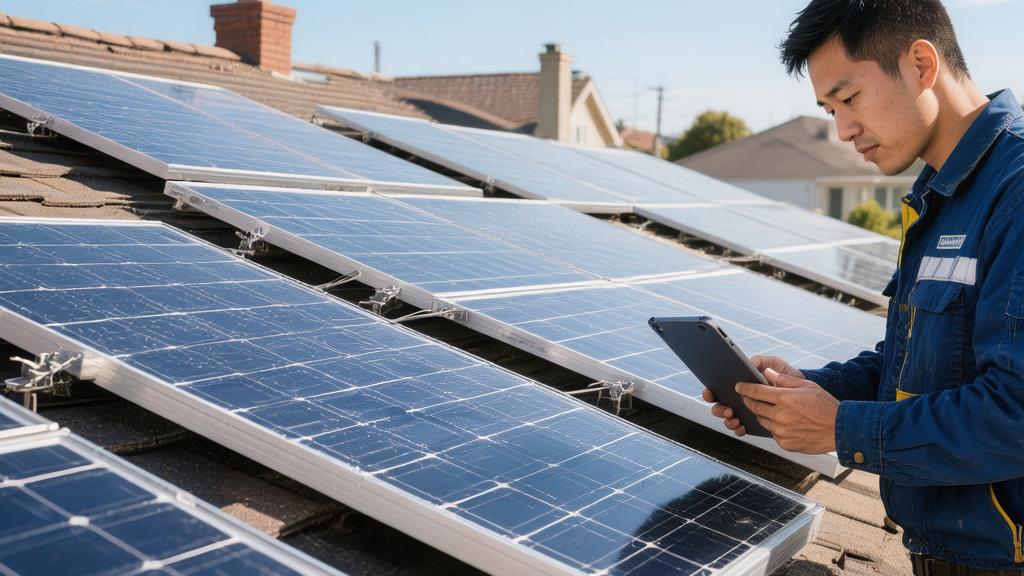
Determine Your Energy Consumption
Check Your Electricity Bills
The household electricity bills from the past 12 months clearly record the cumulative 365 days of kilowatt-hour (kWh) electricity usage data, which accounts for a 95% statistical weight in assessing the installed capacity of a solar system.
The average monthly electricity consumption for residential users in the United States stays at 886 kWh, and the total annual usage calculated using a 12-month multiplier reaches 10,632 kWh.
Carefully check the billing cycles on the bill; a sample number of days for a standard billing cycle is 29 to 31 days, and the calculated average daily consumption rate will show periodic fluctuations between 28 kWh and 30 kWh.
Under a Time-of-Use (TOU) pricing structure, during the peak electricity period from 4:00 PM to 9:00 PM, the unit price of electricity per kWh can climb from 0.12 USD in off-peak periods to 0.38 USD, a rate increase of as much as 216%.
Find two bills containing extreme temperature data from July in summer and January in winter; cooling or heating equipment can cause the single-month electricity volume to exceed 1,500 kWh, and peak electricity consumption is often 80% to 120% higher than the base load data in spring and autumn.
Divide the total data of the past 12 months by 365; the resulting median daily electricity consumption acts as the first calculation numerator for matching the inverter's rated power.
Calculate Major Appliance Consumption
· A standard 5-ton (60,000 BTU) central air conditioner has a continuous operating power range for its compressor and fan fluctuating between 3,500 Watts and 5,000 Watts.
· Assuming the air conditioner runs at full load for 8.5 hours a day in a 90°F (about 32.2°C) summer, it will consume 42.5 kWh in a single day, occupying 55% to 65% of the daily total electricity budget.
· An electric water heater with a 50-gallon capacity serves as the second-largest power-consuming unit, with its heating element's rated working power generally specified at 4,500 Watts.
· Calculated at a frequency of 3.5 hours of heating per day, the single-day power consumption reaches 15.75 kWh, which translates to an annualized cost of approximately 862 USD (calculated at 0.15 USD/kWh).
· For an electric vehicle with a cell capacity of 75 kWh parked in the garage, using a 240-Volt Level 2 charging station with a 9.6 kW AC output power to charge from 20% to 80% requires an intake of 45 kWh of energy, with a charging time of 4.68 hours.
· Based on an annual mileage of 12,000 miles and an average energy consumption parameter of 30 kWh per 100 miles, a single vehicle will create a basic electricity gap of 3,600 kWh per year, causing the overall load standard deviation to rise by 33.8%.
Check for Phantom Loads
Statistical tests from the Lawrence Berkeley National Laboratory show that electronic devices in sleep mode will continuously lose about 1.3 kWh of electricity per day, accounting for 5% to 10% of the total energy consumption base.
A cable TV set-top box with DVR recording capability continues to operate 24 hours a day at a power of 15 Watts to 25 Watts after turning off the video output, generating about 175 kWh of invalid electricity expenditure annually.
An older 25-cubic-foot side-by-side refrigerator that has been in service for over 10 years may consume 2.5 kWh per day—60.4% higher than a new refrigerator of the same volume with Energy Star certification—due to polyurethane sealing strips aging and causing a cold air escape rate of 15%.
A desktop computer host plus two 27-inch LED monitors have a measured standby total power of 8.5 Watts in sleep mode; an annual accumulation of 8,760 hours will produce an invisible cost of 74.4 kWh.
Measuring appliance power requires purchasing a socket-type power meter with an accuracy within 0.5%; after plugging it into a 120-Volt wall outlet, read the cumulative kWh data for 168 consecutive hours (7 days) and divide by 7 to obtain the precise daily standby energy consumption variance.
Leave Enough Margin
Installing a photovoltaic array is a fixed asset investment with a lifecycle of 25 to 30 years; reserving a system capacity margin of 15% to 20% in advance can cover the growth rate of appliances for the next five years.
Plan to upgrade the traditional gas stove to a 36-inch 4-burner induction cooktop within 24 months, which has a maximum total output power of up to 9,600 Watts.
Based on a high-frequency heating rate of 1.5 hours per day, it will generate 525 kWh of new electricity demand annually.
Intend to dig a 15,000-gallon heated swimming pool in the backyard; a 1.5 HP variable-speed water pump cycling for 8 hours a day at 2,500 RPM will consume 6.4 kWh within 24 hours.
A 50,000 BTU air-source heat pump for the swimming pool starts when the water temperature falls below 78°F, operating at a constant power of 4,000 Watts, which will increase the numbers on the meter by 250 to 310 kWh per month.
Monocrystalline silicon materials in solar panels have physical characteristics of Light-Induced Degradation (LID); the photoelectric conversion efficiency of modules will drop by 2% to 3% in the first year of grid connection.
In the subsequent 24-year operation cycle, the panels maintain a linear attenuation rate of approximately 0.5% per year; when establishing an electricity consumption compensation model, the initial demand base must be scaled up by a ratio of 1.2 to 1.25 times.
Identify Your Peak Sun Hours
Check Sunshine Data
Log in to the PVWatts calculator database developed by the National Renewable Energy Laboratory (NREL) and enter the coordinates of a detached villa located in the 89,109 zip code of Las Vegas, Nevada; the system will retrieve statistical variances from meteorological satellite cloud maps of the past 30 years.
Data shows that the area can receive as high as 7.42 hours of peak sunshine on average per day in July, while in December, the daily value will slide to 3.85 hours, with a smooth average of 5.73 hours per day over 365 days a year.
In contrast, an equivalent roof area in the 02,108 zip code of Boston, Massachusetts in the Northeast has its annual average peak sunshine time suppressed to 4.21 hours per day.
On these two coordinate axes with a 26.5% difference in light resources, to produce an equivalent AC output of 10,000 kWh per year, the Boston homeowner must purchase at least 6 more monocrystalline silicon PV modules with a rated power of 400 Watts.
NREL database atmospheric scattering models at a square kilometer precision level show that for every 10% increase in cloud thickness, the average intensity of short-wave radiation reaching the ground drops by 7.3%, and the local annual median power generation will subsequently produce a linear decreasing error of 5% to 8%.
The Earth's rotation axis maintains an orbit with a tilt angle of 23.5 degrees, and the incident angle of sunlight penetrating the atmosphere to reach the roof surface undergoes a tiny shift of 0.26 degrees every day.
Account for Seasonal Differences
Take Los Angeles, California, at 34 degrees north latitude, as an example: on the summer solstice (June 21), the sun's altitude angle at noon reaches its highest point of 79.5 degrees. Light strikes the south-facing asphalt shingle roof with a slope of 4/12 (about 18.4-degree inclination) almost vertically, and the photoelectric conversion efficiency of the module surface approaches the nominal 21.2%.
On the winter solstice (December 21), the sun's altitude angle at noon will plummet to 32.5 degrees, and oblique light rays produce a refraction loss of 15% to 22% when passing through a thicker atmosphere.
To capture a higher density of photon flow, some installers use adjustable aluminum alloy brackets on flat roof structures to lock the tilt at 15 degrees in April to meet the high-latitude intense light of summer, and adjust it upward to 45 degrees in October to intercept low-angle oblique light in winter.
The mechanical intervention of adjusting the physical elevation angle twice a year can push the annualized total power generation yield up by 3.5% to 5.2%.
For an 8,000-Watt PV array fixed at a 20-degree tilt, during the periodic transition where light intensity drops from 1,050 W/m² on the summer solstice to 580 W/m² on the winter solstice, the single-day peak AC output power will shrink from 7,200 Watts to 3,900 Watts accordingly.
Clear Obstructions
A North American red oak tree in the yard, 40 years old and over 55 feet tall, will cast a canopy shadow reaching 30 feet in length onto southwest-facing solar panels between 3:00 PM and 5:00 PM.
In a conventional String Inverter topology circuit structure, 15 panels are connected in series on one circuit via 10 AWG DC cables.
If just one panel with an area of 17.6 square feet has 15% of its light-sensing area shaded by leaves, its short-circuit current (Isc) will plummet from 13.5 Amperes to 2.1 Amperes.
Subject to the physical laws of series circuits, the current output of the entire string of 15 panels will be forced to the extremely low level of 2.1 Amperes, leading to a power generation loss of as much as 84.4% for that circuit in the afternoon.
Introducing an independent AC output solution with Microinverters, where each panel has a device with a rated continuous output power of 349 Watts mounted on its back, allows for 1-to-1 independent AC conversion of the DC power from each module.
When a 400-Watt monocrystalline silicon module encounters 20% shadow area coverage, the independent circuit system only loses 75 Watts of instantaneous power from that single module. The remaining 14 adjacent panels continue to operate at full speed with a full-load power of 380 Watts each, compressing the overall power loss caused by the shadow to 6.6%.
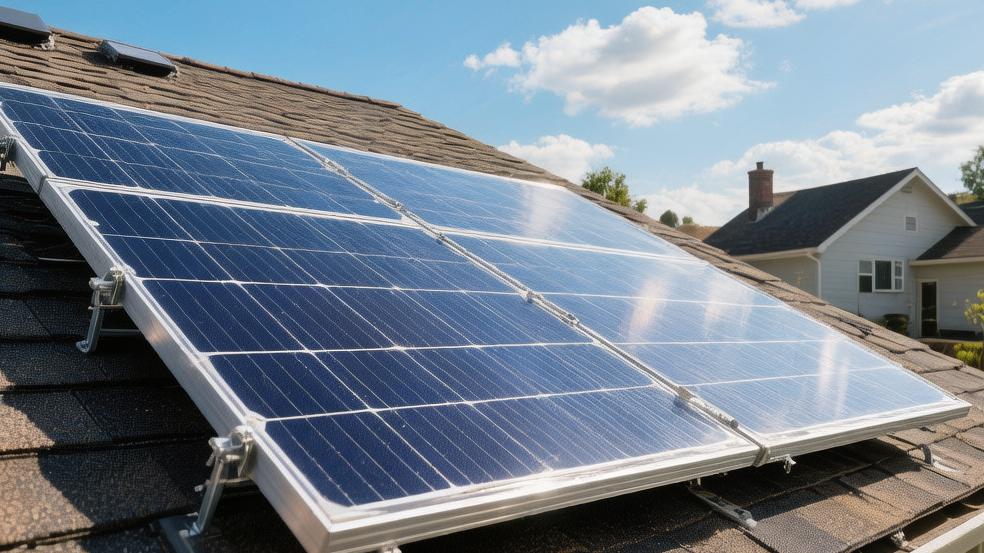
Calculate Your Target System Size
Calculate Kilowatt-Hours
The 12-month cumulative household electricity consumption stands at 10,632 kWh; dividing by the 365-day operation cycle, the calculated median daily basic electricity consumption is 29.12 kWh.
A French door refrigerator with an internal volume of 28 cubic feet, even with US EPA Energy Star certification, will still consume 1.85 kWh per day when the ambient temperature reaches 75°F (about 23.8°C) to maintain settings of 38°F for the fridge and 0°F for the freezer.
An 80-gallon heat pump water heater in the garage, operating at a Uniform Energy Factor (UEF) of 3.45, requires 4.2 kWh per day to heat incoming water from 55°F to 120°F.
Adding up the loads on the electricity list one by one, 29.12 kWh is just a starting threshold.
Set a 105% Offset Percentage to hedge against the physical attenuation of the PV modules over their 25-year lifecycle.
The first-year Light-Induced Degradation (LID) of monocrystalline silicon panels is typically rated at 2%, subsequently decreasing at a rate of 0.5% per year.
In the 25th year, the rated output power of the panels will drop to 84.8% of the nameplate factory rating.
Multiplying the daily base of 29.12 kWh by the offset multiplier of 1.05 results in a target daily power generation that needs to be raised to 30.57 kWh.
Divide by Sunshine Hours
Divide the 30.57 kWh of electrical energy needed per day by the specific local peak sunshine hour parameter.
Assume retrieving a 30-year smooth meteorological statistical model from the NREL database for Reno, Nevada (zip code 89501); the area has an annual average of 5.42 hours of effective peak sunshine per day.
Dividing 30.57 kWh by 5.42 hours results in 5.64 kW. The figure 5.64 kW represents the pure output power requirement at the alternating current (AC) side of the system.
Solar panels on the roof absorb photon flow to produce direct current (DC); the interface protocols for household appliances and the national grid all adopt AC physical standards of 60 Hz, 120 Volts, or 240 Volts.
Calculate Losses
The rated conversion efficiency of string inverters or microinverters typically fluctuates within a narrow range of 97% to 98%.
Dust accumulation on the panel surface creates a 2.5% obstacle to light transmittance, and the voltage drop (thermal loss) caused by rising ambient temperatures accounts for a 4.5% proportion.
DC copper core cables with a 10 AWG diameter on a transmission loop as long as 100 feet have a 1.5% internal resistance thermal energy loss.
Overlaying multiple negative parameters, the industry generally uses a composite Derate Factor of 0.85 for actual installation capacity restoration calculations.
Dividing the AC demand of 5.64 kW by the composite Derate Factor of 0.85 results in a final calculated total DC installed capacity standard of 6.63 kW.
When installers actually configure hardware strings, they often set the DC/AC Ratio between 1.20 and 1.25 to maximize the load utilization of the inverter.
A string inverter with a rated AC output power of 5.0 kW can withstand a maximum DC level input of 6.25 kW.
During time periods in the morning and evening when solar radiation intensity is only 400 W/m² to 600 W/m², a 1.25x oversized DC input allows the inverter's internal circuits to reach the startup threshold earlier and maintain operation on a high conversion efficiency curve above 96%.