What is the life expectancy of a monocrystalline solar panel
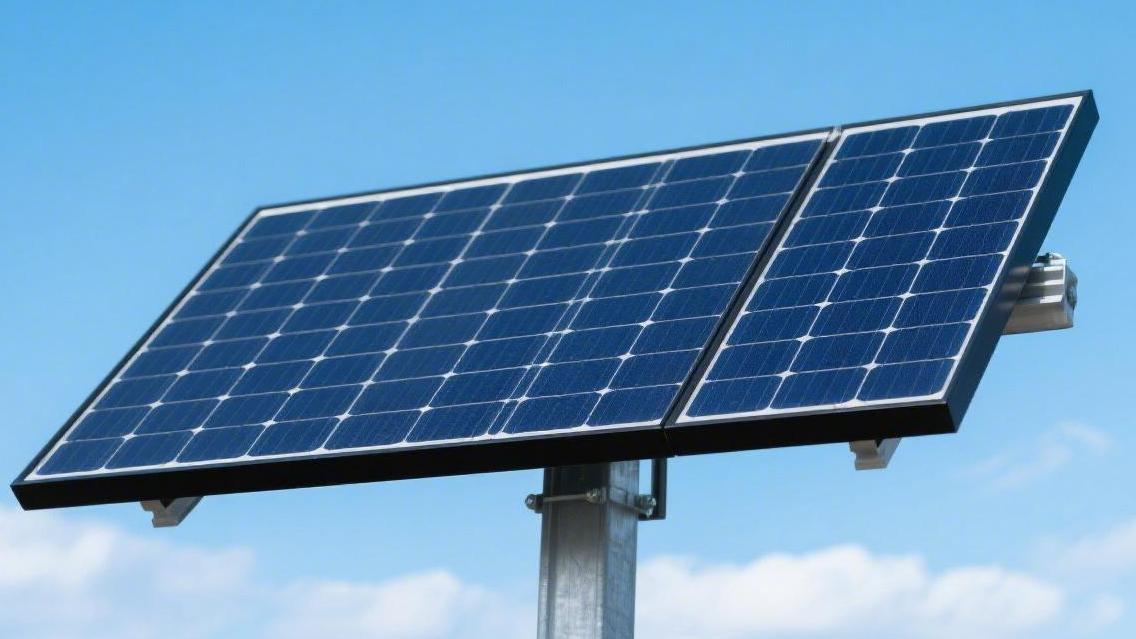
Monocrystalline silicon solar panels are often considered the "evergreens" of the photovoltaic industry, typically boasting a lifespan of 25 to 30 years.
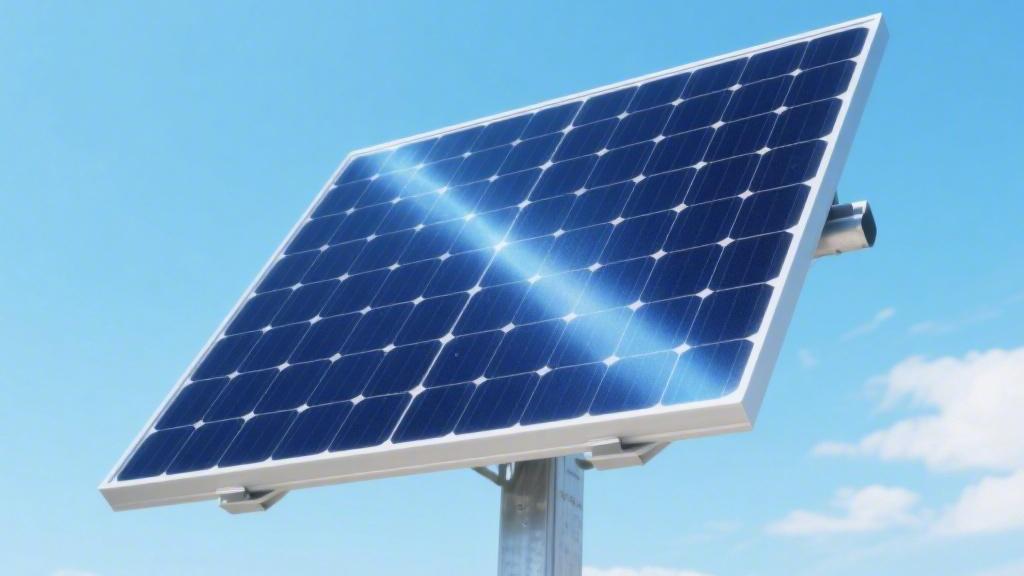
With an annual degradation rate of approximately 0.5%, it is recommended to regularly wipe away accumulated dust and strictly prevent any shading.
Through proper maintenance with good ventilation and heat dissipation, they can be guaranteed to retain over 80% of their output power after 25 years.
The 25-Year Industry Standard
In the procurement and supply chain management of large-scale photovoltaic projects, 25 years is a hard passing line used to balance the depreciation of initial capital expenditure (CAPEX) with long-term operational risks. Monocrystalline silicon ingots manufactured using the Czochralski process achieve a purity of up to 99.9999% (6N level), and the physical stability of this crystal structure provides a highly predictable degradation curve.
Under the 25-year linear power warranty issued by manufacturers, the output power reading of the modules must be greater than 80% to 84.8% of the nominal value at the end of the 300th month. If the measured power of a batch of nominal 400W modules drops to 310W (falling below 77.5%) in the 10th year, under the terms of the supply chain contract, the buyer has the right to file a claim against a Tier 1 supplier, demanding they make up the power difference or provide compensation based on the current spot market unit price of approximately $0.12 to $0.15 per watt.
Warranties Split in Half
In a standard commercial photovoltaic procurement contract, the warranty terms are clearly divided into two main parts, each corresponding to different claim-triggering conditions.
l Product Material Warranty: Typically covers the 1st to the 12th year (extending to 15 years for some high-end models). The coverage targets manufacturing process defects, such as a gap exceeding 2 mm at the frame joints, diode breakdown inside the junction box, or physical whitening of the surface glass causing a drop in light transmittance of over 1%.
l Linear Power Warranty: Covers the full 25-year testing cycle. The contract will stipulate an upper limit of 2% for Light-Induced Degradation (LID) in the 1st year, and from the 2nd to the 25th year, the annual power degradation slope is fixed between 0.45% and 0.55%. Measuring this metric requires strict adherence to STC (Standard Test Conditions): an irradiance of 1,000 W/m², a cell temperature of 25°C, and an air mass (AM) spectral quality of 1.5.
Calculating the Economics
Taking a standard 1MW commercial rooftop distributed project as an example, the total initial investment for equipment procurement and construction is approximately in the range of $1 million to $1.2 million.
l Power Generation Revenue: Assuming the annual average daily sunshine hours at the project site are 4.5 hours, the theoretical power generation of the system in the first year is about 1,642,500 kWh. Calculated at an average annual degradation rate of 0.5%, the cumulative total power generation over 25 years will reach 37,845,000 kWh. Factoring a grid electricity price of $0.10/kWh into the model, it will generate a gross revenue of $3,784,500 over the full cycle.
l Operational Expenditure: The O&M (Operations and Maintenance) budget needs to be set at $15/kW per year. Inverters require a large-scale hardware replacement around the 12th year, reserving a procurement budget of $0.08/watt. An additional $2,000 per year for pure water cleaning costs should also be added.
l Return on Investment (ROI): Excluding full-lifecycle depreciation and maintenance costs, the Net Present Value (NPV) of the procurement project remains high, usually yielding an Internal Rate of Return (IRR) of 12% to 18%, with the payback period generally falling between 5.5 and 6.8 years.
Materials Will Age
After a quarter of a century of exposure to wind and sun, physical wear and tear inevitably occur on the encapsulation materials surrounding the silicon wafers.
l Encapsulation Layer Yellowing: The initial cross-linking degree of EVA (Ethylene Vinyl Acetate) material is between 75% and 85%. Long-term ultraviolet (UV) exposure will cause polymer chain scission leading to yellowing, decreasing light transmittance by about 0.1% to 0.15% annually.
l Backsheet Water Permeability: For backsheets made of PET or fluoropolymer composites, the factory standard for Moisture Vapor Transmission Rate (MVTR) is below 2.0 g/m²·day. After more than 220,000 hours of operation, trace amounts of water vapor infiltration will slowly increase the leakage current inside the module.
l Ribbon Fatigue: The tin-coated copper soldering ribbons (0.2mm to 0.3mm thick) connecting the solar cells will develop microscopic metal fatigue cracks after undergoing thousands of outdoor thermal cycles from -40°C to +85°C. This leads to an increase in series resistance by 10 to 15 milliohms, which translates into heat loss.
What Happens in Year 26?
According to field sampling test data from grid-connected projects in the 1990s, monocrystalline modules that have been in operation for a full 30 years can still stably output 75% to 78% of their nominal power.
l Zero-Cost Service: If the galvanized steel mounting structures (zinc layer thickness greater than 65 μm) and the AC side cables (cross-linked polyethylene insulation rated for 90°C) pass third-party physical flaw detection tests, the marginal cost of keeping the old modules generating electricity approaches zero. On a fixed asset that has fully completed its financial depreciation, every kilowatt-hour of electricity generated in the 26th year represents 100% pure profit.
l On-Site Overhaul: Another supply chain operational scheme is executing a system upgrade. This involves dismantling the bulky, low-power old panels and replacing them with 600W+ large-format modules that possess a conversion efficiency of over 22%. By reusing the original leased roof area and grid connection capacity, the power output per unit area is increased by 40% to 60%. The dismantled old panels, still retaining over 70% of their residual capacity, can be entirely repackaged and sold via reverse logistics supply chains at a salvage value of about $0.03/watt to remote off-grid monitoring systems or low-load agricultural irrigation projects.
Degradation Rate
Initial Sun Exposure
Within the first 72 hours after installation and grid connection, monocrystalline silicon panels will experience a very sharp decline in power, referred to in the photovoltaic supply chain as Light-Induced Degradation (LID). The panels are kept in the dark during factory storage and logistics. Once exposed outdoors to solar radiation with wavelengths between 300 nm and 1100 nm, trace amounts of oxygen atoms remaining inside the silicon wafer quickly combine with doped boron atoms to form Boron-Oxygen complexes (B-O defects). This physical change captures the electrons excited by photons, causing about 1.5% to 2.5% of the power generation capacity to vanish into thin air.
For a large utility-scale power plant with an installed capacity of 50 MW, a 2% initial degradation means losing 1,000 kW of nominal output power in the very month of connection. When accepting a power plant, buyers will typically conduct random inspections strictly according to the IEC 61215 testing standard, requiring suppliers to calculate this initial physical loss into the nameplate parameters in advance.
Leakage Losses
In addition to natural degradation caused by light, a phenomenon called Potential Induced Degradation (PID) generated under high-voltage systems can cause cliff-like damage to module performance. The DC-side voltage of modern commercial photovoltaic systems is generally pushed up to 1000V or even 1500V to reduce line losses and cut procurement expenditures for polarized cables. Under extremely high potential differences, if the system is installed in a tropical or subtropical environment where the relative humidity exceeds 70% year-round, free moisture will seep through the gaps of the aluminum alloy frame into the micrometer-level encapsulation layer.
"In an IEC 62,804 standard test chamber with an ambient temperature of 85°C and a relative humidity of 85%, a -1500 V bias is continuously applied to the test sample for 96 hours."
When sodium ions accumulate heavily on the surface of the PN junction, it triggers severe leakage currents. Electrons that should have flowed into the power grid in exchange for dollars are instead wasted on the frames and grounding metal wires. If an anti-PID recovery device is not installed (such as applying a reverse positive voltage to the inverter at night to push ions away from the silicon wafer surface), the power degradation will continuously worsen and become almost irreversible.
Under Alternating Hot and Cold
In deserts or high-altitude arid regions, the temperature on the panel surface can soar to 75°C during full sunlight at noon and plummet to -10°C in the early morning without sunlight. This massive daily temperature difference of 85°C causes the three main materials inside the panel (silicon wafers, tin-coated soldering ribbons, and tempered glass) to expand and contract completely out of sync.
As physical time passes, microscopic micro-cracks originally invisible to the naked eye will continuously extend under the mechanical stress of wind pressure and snow loads, eventually severing the main metal busbars on the solar cell surface. This causes the local series resistance to surge from a conventional few milliohms to tens of ohms.
The physical consequence of increased resistance is abnormal heating, forming "hot spots" with temperatures exceeding 120°C in localized areas of the panel. Hot spots will accelerate the scorching and carbonization of the polymer backsheet material, leading to a rapid, step-like decline in the output power of the entire panel array, eventually triggering a low-voltage alarm and shutdown of the inverter.
Understanding Warranties
What is Covered?
When signing a procurement or installation contract, you will see two distinctly different warranty lists. The first is the product material warranty, which targets the physical integrity of the module itself. The standard period provided by most Tier 1 manufacturers is 12 years. Some top-tier models will extend this period to 15 or even 25 years by increasing material costs (such as selecting thicker 35mm aluminum alloy frames and double-sided 2.0mm tempered glass).
The material warranty covers specific physical defects, including but not limited to: penetrating micro-cracks on the cell surface, thermal breakdown of bypass diodes inside the junction box, coating peeling, or structural deformation of the aluminum alloy frame. If sub-standard encapsulation processes lead to large areas of visible yellowing (EVA material degradation) or backsheet blistering in the 8th year of operation, the manufacturer must be responsible for replacing the modules for free or issuing a refund based on the current procurement unit price. Such claims usually involve a failure analysis report issued by a third-party testing agency, with testing fees ranging from approximately $300 to $500 per sample group.
Power Generation Guarantee
The second warranty is called the linear power warranty. This is a financial insurance mechanism unique to the photovoltaic industry, usually lasting for 25 to 30 years. It does not guarantee that the panel won't break, but it guarantees that its power generation efficiency must meet the standard at different points in time. The power warranty for monocrystalline silicon modules usually sets two red lines: the maximum degradation amount in the first year (usually no higher than 2%) and the linear degradation rate for subsequent years (usually between 0.45% and 0.55%).
Taking a monocrystalline module with a factory power of 550W as an example, by the 25th year of operation, the manufacturer guarantees that its remaining power will not be lower than 84.8% of the initial nominal value, which is 466.4W. If, during this period, the power drops to 80% due to excessively fast natural aging of the panel, the manufacturer must take remedial action. Common remedial measures include: compensating the owner for electricity loss caused by the power deficit, providing additional modules to make up for the system's total power shortfall, or directly replacing them with brand-new high-power modules.
Warranty Type | Standard Term | Core Coverage Scope | Quantitative Indicators Triggering Claims |
Product Workmanship Warranty | 12 - 15 Years | Physical structure, frame, glass, junction box | Leakage current > 50μA, diode failure |
Linear Power Warranty | 25 - 30 Years | Solar cell photoelectric conversion efficiency | Remaining power after 25 years < 84% |
N-Type Module Specific Warranty | 30 Years | Extremely low initial degradation (LID) | First-year degradation < 1%, annual degradation < 0.4% |
Who is Responsible for Compensation?
The legal validity of the warranty is highly dependent on the survival capability and financial stability of the manufacturer. In the reshuffling of the photovoltaic industry over the past two decades, many Tier 2 and Tier 3 manufacturers declared bankruptcy in their 5th or 10th year, turning the 25-year warranty documents they signed into uncashable waste paper. To circumvent this risk, large commercial projects usually require manufacturers to purchase "third-party reinsurance."
Even if the original manufacturer goes bankrupt, insurance giants such as Munich Re or Allianz will intervene and assume the power compensation responsibility for the subsequent dozen or so years. The premium for this reinsurance usually accounts for 1% to 3% of the module procurement cost, but for investors pursuing long-term stable returns, it is an indispensable risk-hedging tool.
Strict Claim Thresholds
Manufacturers typically require owners to provide detailed on-site operation data and STC (Standard Test Conditions) reports in a laboratory environment. STC requires a flash test to be conducted under an irradiance of 1,000 W/m² and a light-receiving surface temperature of 25°C.
In many cases, low on-site power generation is not a module failure, but rather due to decreased inverter MPPT efficiency, excessive DC cable voltage drop (over 3%), or shading caused by the growth of surrounding trees.
If the owner cannot provide calibrated irradiance meter data to prove that the ambient light intensity meets the standard, the manufacturer has the right to reject the claim request. In addition, rule-violating cleaning by non-professionals (such as using acidic or alkaline detergents that damage the anti-reflective coating) or improper installation (such as poor frame grounding leading to the PID effect) will also directly invalidate the warranty.
"According to the Photovoltaic Operations and Maintenance (O&M) agreement, a claim application for a single module usually needs to include: EL (Electroluminescence) test photos to prove the distribution of internal micro-cracks, an I-V curve test report to quantify electrical parameter deviations, and the system's daily power generation records for the past 12 months. If the test results show that the power deviation falls within the ±3% measurement error range, the manufacturer will typically not pay compensation."
Post-Expiration Returns
When the 25-year warranty period officially ends, the panels are not scrapped like combustion engine vehicles; they remain high-quality assets capable of generating positive net cash flow. At this point, all financial depreciation of the system has been cleared to zero, and the second-round replacement cost of the inverter has also long been amortized.
After the warranty period, the annual degradation of the panels will accelerate slightly due to the aging limits of the materials, increasing from 0.5% to approximately 0.8%.
In the 30th or even the 35th year, you still possess a power generation system capable of outputting over 70% of its initial power. As long as the structural life of the roof allows (typically 50 years for reinforced concrete structures and 20-25 years for light steel structures), this "zero-cost" operating equipment will become a pure profit machine.