Does a solar inverter need to be in the shade
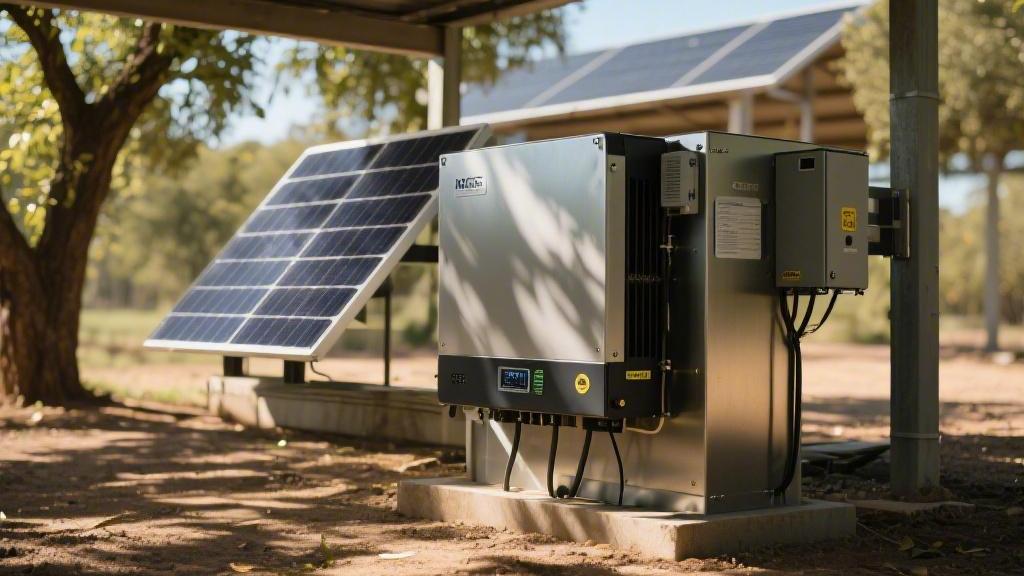
It is highly recommended to install solar inverters in a cool, well-ventilated area.
Because its internal electronic modules are sensitive to heat, long-term exposure to the sun will trigger a "temperature derating" protection when the temperature exceeds 50°C, causing the output power to drop by about 20% to 50%.
During installation, sunshades should be added or roof eaves used for shading, and ensure a heat dissipation space of at least 20 cm is left all around to extend the service life by about 30%.
Performance
Reduced Power Generation
When the power switch tubes (IGBT) inside the inverter modulate direct current (DC) into alternating current (AC), they inherently generate about 1.5% - 2.5% of heat loss. If an 8 kW inverter is mounted on an unshaded south-facing wall and the solar radiation intensity reaches 1,000 W/㎡ at 12:00 noon, the heat absorbed by the casing will cause the heat sink temperature to rapidly soar above 70°C.
When the internal ambient temperature exceeds the 50°C threshold, the output power will be forced to decline at a rate of 3% - 5% for every 1°C increase. During a continuous 4-hour high-temperature sun exposure, a machine that should originally output 6,000W might be suppressed to operate at 4,200W. Every day, you will lose about 7.2 kWh of power generation. Calculated at an electricity rate of 0.5 RMB, the single-day economic loss is 3.6 RMB. Over a 90-day summer high-temperature period, the cumulative loss can reach 324 RMB, which is already enough to cover the cost of a high-spec aluminum alloy sunshade.
Shortened Lifespan
An inverter is essentially a precision device composed of hundreds or thousands of electronic modules, the weakest link of which is the electrolytic capacitor. According to the "Ten-Degree Rule" in electronic engineering, for every 10°C increase in the operating temperature of a module, the evaporation rate of its chemical electrolyte will double, causing its effective lifespan to be directly halved.
· In a cool and ventilated place at 40°C, the design life of a high-quality capacitor is typically 15 years.
· If exposed to a blazing sun environment at 60°C for a long time, its physical lifespan will quickly shrink to about four years.
Considering that the purchase price of current mainstream residential inverters ranges from 4000 RMB to 12000 RMB, a machine being scrapped five years early due to a lack of shading is equivalent to an annual asset depreciation fee increase of 800 - 2400 RMB. In addition, high temperatures can cause the sealing strips to dry out and crack, reducing the original IP65 protection rating to an IP20 level within 36 months, greatly increasing the risk of short circuits caused by rainwater penetration.
Rapid Heating
Inverters rely on heat sinks for natural convection or fans for forced cooling. If installed on an unshaded south wall, the ambient thermal convection speed will be lower than 0.1 m/s, which will cause a "hot air film" to form on the surface of the heat sink, increasing thermal resistance by more than 20%.
During summer middays, the real-time operating temperature of the main control chip inside the inverter may reach 85°C. Once this indicator hits the maximum value, the system will frequently perform a "switch reset." Each shutdown and reconnection usually takes 60 seconds - 120 seconds. If it restarts frequently five times a day, in addition to reducing daily power generation by about 1%, it will also increase the switching frequency of the internal relay contacts by thousands of times, accelerating contact oxidation and physical damage.
Accurate Positioning
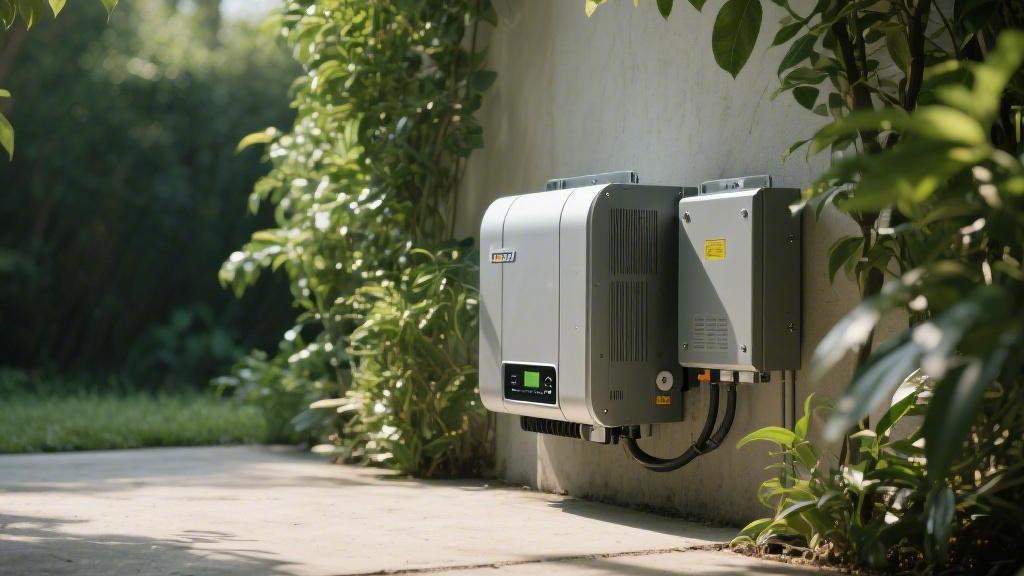
If the house is located in the Southern Hemisphere, the best position is the south wall; in the Northern Hemisphere, the north wall is preferred, where the average ambient temperature is 8 - 12°C lower than the south wall.
· North Wall (Optimal): The probability of sunshine is less than 5%, and the ambient temperature throughout the day is close to the natural air temperature.
· East Wall (Good): Only exposed to weak ultraviolet rays from 8:00 - 10:30 in the morning, and remains in the shade during the high-temperature periods after 13:00 in the afternoon.
· West Wall (Worst): The "westward sun" thermal radiation from 14:00 - 17:00 in the afternoon is the most intense, at which time the ambient temperature can reach 45°C, and the heat accumulation effect is the strongest.
The installation height should be maintained between 1.2 - 1.5 meters from the ground to avoid heat reflection from the ground. At the same time, a ventilation gap of at least 30 cm must be left around the equipment to ensure the airflow circulation rate is above 0.5 m/s.
High Replacement Costs
The inverter is the most failure-prone part of the entire photovoltaic system, accounting for 70% of the maintenance costs over the system's entire life cycle. If the internal motherboard of the inverter burns out due to sun exposure, the out-of-warranty repair cost (including labor, shipping, and parts) is usually between 1500 - 3000 RMB.
In contrast, the market price of a 60 cm x 50 cm aluminum-plastic panel or stainless steel sunshade is only 60 - 150 RMB. This one-time, low-cost investment can prevent at least one whole-machine replacement or two core circuit board repairs during the 25-year photovoltaic operation cycle. Calculated out, the static investment payback period for shading measures is usually less than 1.2 months.
Shading Measures
In cases where installation on a sun-facing wall is unavoidable, adding shading facilities is the only remedial measure. An ideal shading design should meet the following technical parameters:
1. Size: The sunshade should be 15 - 20 cm wider on the left and right sides of the inverter and protrude 30 cm above to block lateral oblique sunlight.
2. Spacing: A vertical gap of 10 - 15 cm must be kept between the sunshade and the top of the inverter to prevent heat accumulation at the top from forming a heat island effect.
3. Material: Priority should be given to white aluminum alloy or silver stainless steel materials with high reflectivity. Their thermal reflectivity can reach over 85%, which is far superior to dark-colored panels.
Longevity
Module Aging
According to the industry-standard Arrhenius failure model, for every 10°C increase in operating temperature, the internal chemical reaction rate of a capacitor doubles, and its effective lifespan is directly halved. In an inverter with a nominal lifespan of 100,000 hours (about 11.4 years), if the heat sink operates at 75°C for a long time instead of the standard 40°C, the actual service life of the capacitor may be shortened to less than 3 years. This physical drying out and capacity degradation will cause the Total Harmonic Distortion (THD) of the output waveform to rise from 3% to over 8%, ultimately triggering logical errors or short circuits in the control circuit board.
Casing Cracking
The inverter casing is usually made of aluminum alloy, stainless steel, or flame-retardant plastic. When discussing its main role in the longevity of photovoltaic inverters, the most intuitive benchmark is whether the equipment can operate smoothly for its full design cycle of 10 to 15 years. As the only complex electronic power source in the entire photovoltaic system, the inverter integrates thousands of semiconductors, sensors, and energy storage modules. The sensitivity of these modules to ambient heat far exceeds that of the solar panels on the roof.
Long-Term Durability
Although inverter casings are usually made of die-cast aluminum and sprayed with anti-UV powder, under long-term exposure to solar radiation of 1,000 W/㎡, the real-time temperature of the casing surface can easily exceed 65°C. This continuous high-temperature environment will accelerate the molecular degradation of the external sealing rings and plastic parts at the interfaces.
Experimental data shows that high-quality Ethylene Propylene Diene Monomer (EPDM) rubber seals can maintain their elasticity for over 20 years in a cool place at 30°C, but under sun exposure at 70°C, their embrittlement speed increases by 3 - 4 times. Once the seal fails, moisture and dust from the environment will penetrate the circuit board through micro-cracks, causing the internal insulation resistance to drop below the safety threshold of 1MΩ, thereby triggering frequent system errors or complete burnout.
At the circuit board level, solder joints will also generate mechanical stress due to frequent thermal expansion and contraction. If the inverter is exposed to the sun and reaches 75°C during the day and cools down to 20°C at night, the daily temperature difference of up to 55°C will cause micron-level cracks in the solder paste joints.
After 1000 cycles (about 3 years), this will cause the contact resistance to increase from 0.1 Ω to over 2 Ω. Localized heating will further deteriorate, eventually forming a vicious cycle that makes the inverter failure rate soar from a normal 0.5% to over 5%.
Vulnerability to Sun Damage
Electrolytic capacitors are the most critical but also the most "short-lived" modules inside the inverter, primarily used to smooth out DC voltage fluctuations. These capacitors are filled with conductive liquids, and their physical properties strictly follow the Arrhenius chemical reaction rate equation.
According to general industry technical specifications, for every 10°C increase in the operating temperature of an electrolytic capacitor, the evaporation rate of its internal electrolyte doubles, and its effective capacity will drop by 15% - 20%. If an inverter operates in a ventilated, shaded area at 40°C, its capacitor lifespan can reach 100,000 hours; if installed on an unshaded west-facing wall, the ambient temperature rise combined with operational heat keeps the capacitor at 60°C for a long time, shortening its lifespan to less than 25,000 hours.
Core modules that could originally last 12–15 years may dry out and fail by the 4th or 5th year in an exposed environment. When the electrolytic capacitor loses its ability to filter ripples, the quality of the current output by the inverter will deteriorate.
Total Harmonic Distortion (THD) may rise from below 3% to above 8%. This not only damages precision appliances in the home but also increases the risk of grid fluctuations. The repair cost of replacing these core capacitors often accounts for 15% - 25% of the price of a new machine, and post-repair stability is usually only about 80% of the original factory state.
Accelerated Aging
Long-term UV irradiation will destroy the molecular structure of the LCD panel, causing black spots to appear on the screen or turning it completely white within 3 - 5 years, making users unable to directly read real-time data such as generated power, voltage, and current.
Statistics show that in fully exposed environments, the screen damage rate of outdoor inverters is 60% higher than in shaded environments. In addition, under the combined effects of high temperature and UV rays, the plastic operating handle of the DC switch will exhibit obvious discoloration and embrittlement. The operating torque will decay from a normal 2.5 N·m to less than 1.0 N·m, making it extremely prone to breaking in an emergency. This results in an inability to cut off the power properly, increasing safety risks during maintenance.
If a 10 kW system requires a full unit replacement in its 6th year due to a lack of shading, the depreciation cost will increase by about 8,000 RMB. Adding a simple physical shade not only reduces the failure rate by 40%, but also ensures the equipment maintains over 95% of its original conversion efficiency beyond its warranty period (usually 5 - 10 years). This is equivalent to adding 3,000 to 5,000 kWh of extra revenue space to the entire investment.
Running Stably
Under intense sun exposure, fans must run at full speed to dissipate the internal accumulated heat. Long-term full-load operation will accelerate the wear of the fan bearings, and the lubricating oil will quickly thin out and leak at high temperatures above 50°C.
In a normal shaded environment, the Mean Time Between Failures (MTBF) of the fan is about 50,000 hours, but in an exposed environment, the fan will usually make abnormal noises or experience a drop in rotational speed at around 15,000 hours. Once the fan speed drops from 3000 RPM to 1500 RPM, the internal heat dissipation efficiency will drop by more than 50%.
Even for machines featuring a natural cooling design, the aluminum alloy fins on the back will absorb a large amount of radiant heat under direct sunlight, causing the heat sink's temperature rise efficiency to drop from 10W/K to 6W/K. This temperature increase limits the stability of the inverter during high-load periods, and the system may frequently restrict the maximum output current to protect the motherboard. Keeping the environment cool ensures that fans or heat sinks are always operating under low-stress conditions, ensuring the machine won't "go on strike" for self-protection during the peak power generation hours of 11:00 - 14:00 on summer middays.
Physical Protection and Aesthetics
Although many manufacturers claim their equipment has IP66 or NEMA 4X protection ratings, these are usually conclusions drawn in a static laboratory environment. During actual outdoor operation spanning 10 to 25 years, physical weathering, UV degradation, and foreign object intrusion will break down the device's defense systems from the outside, ultimately penetrating into the internal precision structures.
Rugged Casing
Long-term sun exposure is not just a heat issue; ultraviolet rays with a wavelength between 290 nm - 400 nm will directly destroy the molecular bonds of polymers.
For non-metallic modules, such as DC connectors (MC4 connectors), AC output terminal covers, and sealing rings, UV irradiation will cause a "photo-degradation" reaction in the materials. This reaction will cause originally tough engineering plastics to lose over 40% of their tensile strength within 36 - 60 months. Casing modules originally designed to withstand a 100 N impact force may develop cracks with just 20 N of force after long-term sun exposure.
External Module Name | Expected Lifespan (Shaded) | Expected Lifespan (Exposed) | Common Physical Failure Modes |
DC Connectors (MC4) | 20 - 25 Years | 5 - 8 Years | Plastic embrittlement, casing cracks causing electrical leakage |
LCD Display Screen | 12 - 15 Years | 3 - 5 Years | Liquid crystal leakage, black spots, unreadable |
Sealing Rings | 15 - 20 Years | 4 - 6 Years | Hardening and dry cracking, IP rating failure |
Operating Knobs/Switches | 15+ Years | 6 - 8 Years | Color fading, mechanical structure jamming |
By installing a physical sunshade, the intensity of UV rays received on the equipment's surface can be reduced by over 95%. Not only does this keep the machine looking like new after 10 years (which directly affects the valuation of the photovoltaic system when the house is resold), but more importantly, it ensures that maintenance switches can be toggled normally in emergencies. If the handle of the DC switch becomes brittle due to long-term exposure, the handle may break right in the operator's hand when an emergency power cut is needed during an arc fire, resulting in the inability to shut off 1000V high-voltage DC power in time.
Weatherproofing
If the rainwater contains acidic substances (acid rain with a pH value below 5.6), they will react with the aluminum alloy of the inverter's heat sink to form a thick oxide scale. The thermal conductivity of this oxide scale is only about 10% of that of aluminum, which will severely hinder the dissipation of heat into the air, causing the internal temperature to rise by 5 - 8°C.
Additionally, bird droppings contain high concentrations of uric acid and phosphates, which are extremely corrosive to metal coatings. If no sun canopy is installed, these droppings accumulating in the gaps of the heat sink fins will not only block airflow (reducing the effective ventilation area by 15% - 20%), but may also corrode the sealant of the circuit board's inlet holes in damp environments. After adding a sunshade cover, the cleaning frequency of the inverter casing can be reduced from once a quarter to once a year, saving about 60% in external maintenance labor costs.
Aesthetics
Through customized sunshade designs, originally obtrusive industrial equipment can be hidden within protective shells that match the color scheme of the building. This is not just for the sake of looking good; from a real estate appraisal perspective, well-maintained and clean-looking photovoltaic hardware can boost the premium rate of the entire system by 2% - 5%.
Protection Measure | Estimated Cost | Maintenance Cycle | Core Benefit |
Bare Installation | $0 | Clean every three months | Zero initial investment, but extremely fast equipment depreciation |
Simple Plastic Cover | $20 - $40 | Replace every two years | Blocks UV rays, but poor durability |
Custom Aluminum Canopy | $80 - $150 | Maintenance-free for 20 years | Cools by 10°C+, protects physical structure integrity |
Fully Enclosed Ventilation Cabinet | $300+ | Inspect fans every six months | Ultimate protection, suitable for extreme harsh climates |
A well-designed sunshade should adopt a 45-degree tilt angle to prevent water and snow accumulation, and its edges should extend at least 100 mm - 150 mm beyond the outer contour of the inverter. This physical barrier can effectively reduce the direct wear and tear of wind and sand on the cooling fan bearings, lowering the fan failure rate by about 30%.
Over long-term operation, this attention to physical protective details can reduce potential extra maintenance expenses (such as replacing display screens or seals) by 1500 - 4000 RMB, ensuring that your return on photovoltaic investment always remains within the expected 12% - 15% range.