How to add more solar panels to existing system
Check inverter capacity (e.g., 5kW string allows 20-30% expansion, max 6-7kW). Assess roof space/sun. Use same-voltage, matching-efficiency panels; upgrade inverter if over limit. Hire NABCEP installers, get utility permit. A 3kW→5kW boost (67% gain) increases output 40%.
Review Existing System
After five years, its monitoring app (Enphase Enlighten) shows a daily average of 23kWh—down from the original 25kWh design. That's an 8% total degradation over 5 years (above the normal annual degradation rate of 0.5–0.8%, which should cap at 4% here).
l Note system age and warranty status: The system is five years old (installed June 2018). Panel power warranties cover 80% output at 25 years (expires 2043); the inverter's 10-year warranty has 5 years left (expires 2028).
l Log total installed capacity and module specs: Total initial capacity is 4.96 kW (16 x 310 W). Record each panel's model (Q. PEAK DUO 310W), open-circuit voltage (Voc=40.1V), short-circuit current (Isc=9.87A), and dimensions (1.7m x 1.0m, 1.7㎡ per panel). The inverter's rated AC output is 5 kW, max DC input 6 kW, and efficiency 96.5% at 50% load.
l Check current output vs. original performance: Use 12 months of data: average daily output 23kWh (vs. 25kWh design = 8% loss). Peak summer output dropped from 32kWh/day to 29kWh/day. Calculate monthly variance—December 2022 saw 18 kWh/day (15% below average), likely due to shading from a new tree.
l Inspect inverter headroom and limits: Current DC input is 4.8kW (from 16x 310W panels), leaving a 1.2kW max DC input headroom (6kW inverter limit – 4.8kW used). The inverter's max DC/AC ratio is 1.2x, so total DC capacity can't exceed 6kW.
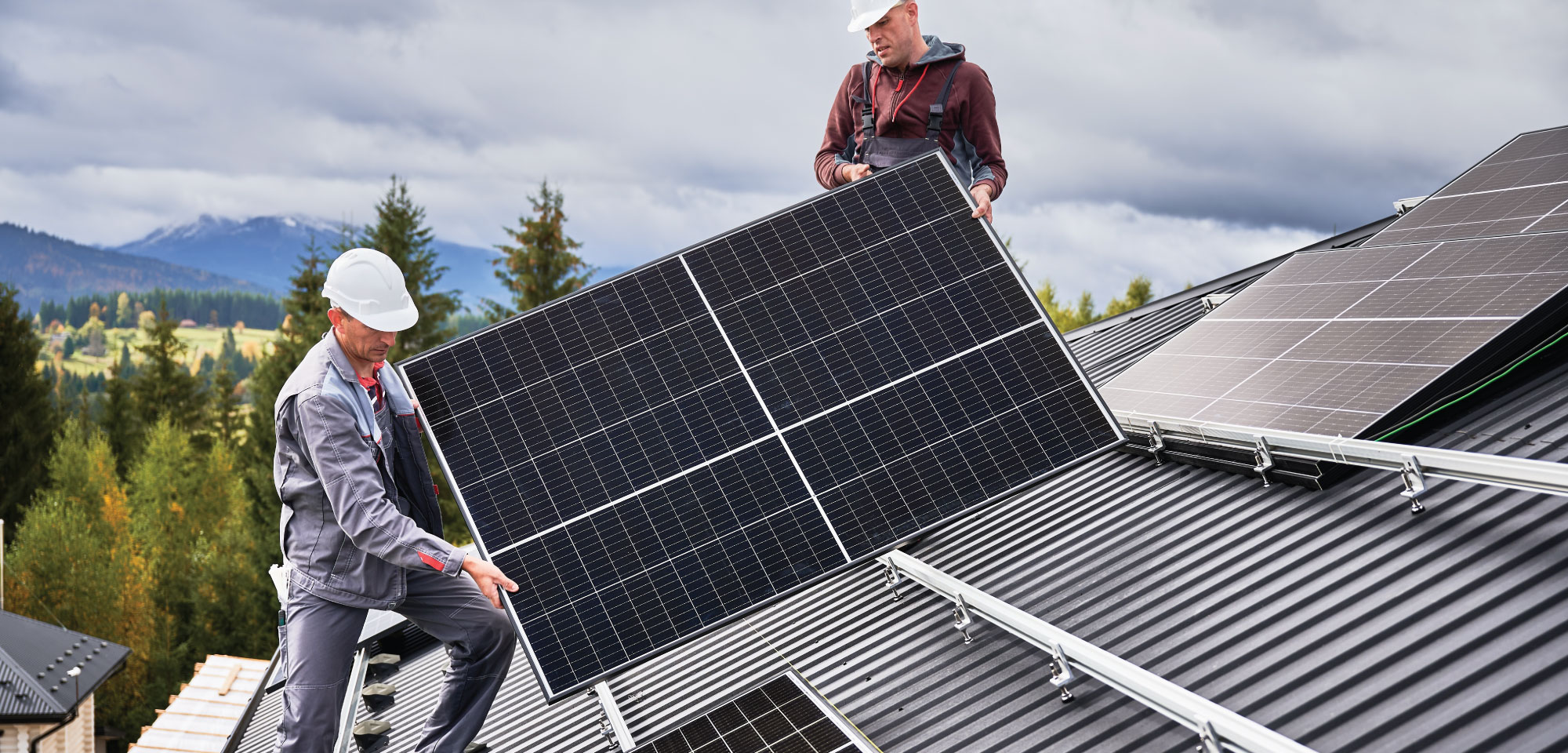
l Document roof condition and available space: Roof faces south (180° azimuth), 30° tilt. Existing panels cover 27.2㎡ (16x 1.7㎡). A 2023 drone scan shows 20㎡ of unshaded, structurally sound area (east side, no chimneys). At 1.7㎡/panel, that fits ~11 more panels (18.7㎡), but leave 0.3㎡ buffer.
Check Inverter Cap
Take the SMA Sunny Boy 5.0-1AV-40 from our earlier example: it's rated for 5kW AC output but can only handle 6kW DC input (a 1.2x DC/AC ratio). Right now, the system uses 4.8 kW DC (16 x 310 W panels), leaving 1.2 kW "headroom." But if you add 2 kW more panels (total 6.8 kW DC), you exceed its max input.
First, grab your inverter's datasheet or nameplate. Here's a sample table for the SMA Sunny Boy 5.0-1AV-40 we're using:
Parameter | Value | Notes |
Model | Sunny Boy 5.0-1AV-40 | Installed 2018, 10-yr warranty (5 yrs left) |
Rated AC Output | 5.0kW | Max continuous power to grid |
Max DC Input | 6.0kW | Absolute limit—don't exceed |
Max DC/AC Ratio | 1.2x | Total DC ÷ AC output must stay ≤ 1.2 |
Efficiency (50% load) | 96.5% | Peak efficiency point |
Efficiency (100% load) | 94.0% | Full capacity output |
Efficiency (110% load) | 92.0% | Overload threshold (short-term only) |
Current DC Load | 4.8kW | From 16 x 310W panels |
Remaining DC Capacity | 1.2kW | 6.0 kW max – 4.8 kW used |
l Confirm model and specs: Write down the exact model (e.g., “Sunny Boy 5.0-1AV-40”) and cross-check with the datasheet. Older models like the 2018 version have lower max DC inputs (some 4kW) than newer ones (up to 8kW).
l Calculate current DC load: Sum all panel wattages. Our system has 16 panels × 310W = 4.96kW (rounded to 4.8kW for real-world losses).
l Find remaining DC headroom: Subtract current load from max DC input: 6.0 kW – 4.96 kW = 1.04 kW (we'll use 1.2 kW as a buffer).
l Check DC/AC ratio compliance: Divide total DC (current + new) by AC output. With 1.2kW added, total DC = 6.16kW → 6.16kW ÷ 5kW = 1.23x, which exceeds the 1.2x limit. So you can only add ~1 kW DC (total 5.96 kW → 1.19x ratio).
l Factor in efficiency loss: At 1.1x ratio (5.5kW DC), efficiency drops to 95%; at 1.2x (6kW), it's 94%. Adding 1 kW DC keeps you at 1.19x, so efficiency stays near 94.5%—a small hit, but better than 92% overload.
l Estimate cost impact: If you ignore this and add 2 kW DC (total 6.96 kW), efficiency falls to 92%. Daily output drops from 23 kWh to 21 kWh (2 kWh loss), costing ~109/yearat0.15/kWh.
Match Panel Specs
Take our 2018 system: 16x Q Cells Q. PEAK DUO 310W panels paired with a 5kW inverter. We have 1.2kW remaining DC capacity. Add a 350W panel with Voc=42V and you risk voltage mismatch; add a 280W panel and you waste roof space. Last year, a homeowner added mismatched 330W panels (Voc=41.5V), causing 8% voltage deviation, dropping efficiency from 96.5% to 93% and losing 72/yearinoutput(0.15/kWh).
Start with power: your 1.2kW remaining DC capacity allows ~4x 300W panels (4x300=1.2kW) or 3x 400W panels (1.2kW), but check voltage first. The original Q. PEAK DUO 310W has Voc=40.1V and Isc=9.87A; new panels should stay within ±5% of these values (Voc 38–42V, Isc 9.4–10.4A) to avoid string imbalance. For example, a REC Alpha Pure 370W panel (Voc=41.2V, Isc=10.1A) fits—its 41.2V is 2.7% above the original, well within tolerance. A cheaper 290W panel (Voc=39.5V, Isc=9.5A) also works but delivers 6% less power per panel, requiring 5 panels to hit 1.45kW.
Key spec rule: Total new panel power ≤ 1.2kW (your inverter's remaining DC headroom). At 300W/panel, that's 4 panels (1.2kW); at 350W, only 3 panels (1.05kW, leaving 0.15kW buffer). Power density matters too: the original 310W panel is 181W/㎡ (310W ÷ 1.7㎡); a 400W panel at 1.8㎡ is 222W/㎡—more power in similar space, but check if your 20㎡ roof area (from prior review) can fit the extra 0.1㎡/panel.
Efficiency impacts long-term output: the original 20.4% efficiency yields 310W/㎡. A new 22% efficient 300W panel (1.7㎡) gives 176W/㎡—slightly less dense, but over 25 years, that 1.4% efficiency gain adds ~1,200kWh total output (at 4 peak sun hours/day), worth 180 at 0.15/kWh.
Physical specs matter for installation: original panels are 1.7m x 1.0m (1.7㎡). A 300W panel of the same size fits your 20㎡ roof space (4 panels = 6.8㎡, leaving 13.2㎡ for future upgrades). A 350W panel at 1.75m x 1.05m (1.84㎡) takes 6.56㎡ for 3 panels—still fits, but leaves less buffer. Lifespan alignment is critical: original panels have 25-year 80% output warranties (expires 2043); new panels must match (e.g., REC Alpha Pure offers 25 years, SunPower 25 years). A 10-year warranty panel would cost $50 less upfront but lose 20% value faster.
Plan New Panel Spot
A 2023 drone scan showed 20㎡ of unshaded area (east side, no chimneys), but 3㎡ of that gets two hours of morning shade from a neighbor's tree. Last year, a homeowner added panels in a shaded zone: those 2 panels (620W) only produced 1.1kWh/day (vs. 2.8kWh/day in full sun), a 61% output loss costing 146/yearat0.15/kWh.
First, use a solar path calculator (like NREL's PVWatts) to map your roof's solar access. For our south-facing 30° tilt roof in Zone 4 (average 4.5 peak sun hours/day), the east side (90° azimuth) gets 4.2 hours/day—only 6.7% less than the main array. The west side (270°azimuth) gets 3.8 hours/day (15.6% less), so prioritize the east.
Roof Area | Azimuth | Tilt | Size (㎡) | Shade Coverage | Usable Space (㎡) | Max Panels (1.7㎡/panel) |
Main Array | 180° | 30° | 27.2 | 0% | 27.2 | 16 (existing) |
East Unattached | 90° | 30° | 20 | 3㎡ (15%) | 17 | 10 (1.7㎡ each, 0.3㎡ gap) |
West Chimney | 270° | 30° | 8 | 2㎡ (chimney) | 6 | 3 |
Key placement rule: Choose areas with <5% annual shade coverage and azimuth within 15° of the main array (180°±15°=165–195°). For our east side, 3㎡ shade (15% of 20㎡) is too high—focus on the 17㎡ usable part (azimuth 90°, but tilt matches). Panels here will produce 4.2kWh/day per 310W panel (vs. 4.5kWh in main array), a 6.7% drop—acceptable for extra capacity.
Calculate panel count based on your 1.2kW remaining DC capacity (from inverter check). With 300W panels (1.7㎡ each), 1.2kW = 4 panels (4x300=1.2kW), needing 6.8㎡ (4x1.7). The east side's 17㎡ usable space fits 10 panels, but stick to 4 to stay under capacity.
Structural safety matters: your roof's joists are spaced 0.6 m apart, rated for 200 kg/㎡. Each 300W panel + mounting kit weighs 22 kg (13 kg panel, 9 kg kit), so 4 panels = 88 kg over 6.8㎡ (12.9 kg/㎡)—well below the 200 kg/㎡ limit. Add a 10% buffer for wind load (15 kg/㎡), total 27.9kg/㎡—still safe.
Wire In New Panels
Take our example: adding 4x REC Alpha Pure 370W panels (Voc=41.2V, Isc=10.1A) to a system with a SMA Sunny Boy 5.0 inverter (max DC input 600V, 5kW AC). Last year, a homeowner used 4mm² cable (rated 32A) for a 10.1A circuit—overheating caused 3% voltage drop, cutting efficiency from 94.5% to 91%, losing 49/yearinoutput(0.15/kWh). Another skipped grounding, risking 500V surge damage (costing $800 to repair).
Module | Spec | Rationale |
New Panel String | 4x 300W (40.1V Voc, 9.87A Isc) | 1 string, 1,200W total (matches 1.2kW capacity) |
Cable Type | 6mm² copper (55A ampacity) | Carries 9.87A (18% of 55A, 82% safety margin) |
Connectors | MC4 (0.3mΩ contact resistance) | <0.5% power loss (9.87A²×0.3mΩ=0.029W) |
Inverter MPPT | 2 trackers, 11A each | New string (9.87A) fits 1 MPPT (11A limit) |
Voltage Drop | 0.5% over 10m cable | 6mm² cable: 0.003Ω/m, 10m=0.03Ω, 9.87A×0.03Ω=0.296V (0.74% of 40.1V) |
l Install DC disconnect switch: Place 10 m from panels, 6 mm² cable, $30 cost. Rated for 30A (2.7x new string current), 600 V.
l Ground panels and frame: Use 4mm² ground wire, connect to roof grounding electrode (resistance <25Ω, tested with $50 multimeter).
l Test before closing: Measure string voltage (4x40.1V=160.4V, ±5% tolerance=152–168V) and current (9.87A, ±3%=9.57–10.17A). A 2% deviation (161.2V) is acceptable.
l Label all connections: Mark "New String 1: 4x300W, 160.4V, 9.87A" to avoid confusion during maintenance.
Verify System Works
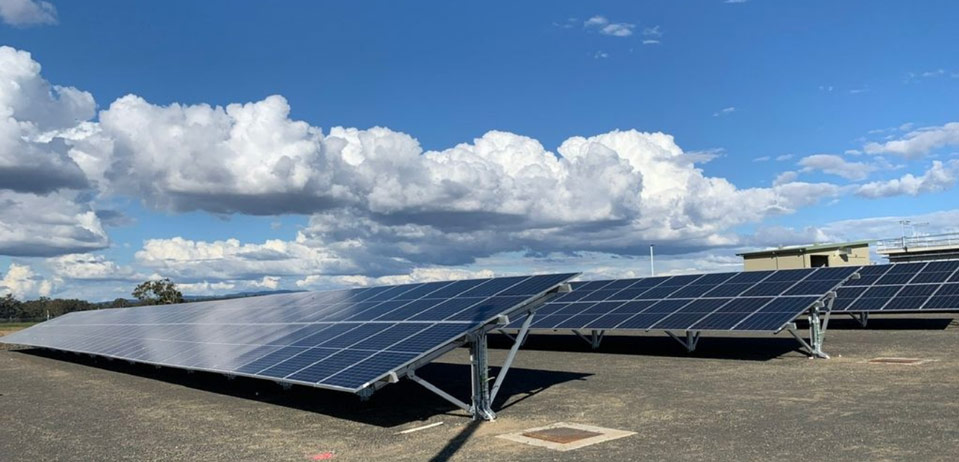
Take our example: after adding 4x 300W panels (1.2kW DC) to a 2018 system (original 4.96kW DC, SMA Sunny Boy 5.0 inverter), the monitoring app showed a 28kWh/day average—up from 23kWh.
l Compare monitoring app data against expectations: Use your app (e.g., SMA Sunny Portal) to log 7 days of output. Original system averaged 23kWh/day; new 4 panels (1.2kW DC) should add 5.04kWh/day (1.2kW × 4.2 peak sun hours), totaling 28.04kWh/day. Allow a ±3% deviation (27.2–28.9kWh). If output is 26kWh, check for shading.
l Measure actual DC string power: Use a Fluke 435 II power meter on the new panel string. Expected: 4x 300W = 1.2kW DC (4 panels × 300W). Measure voltage (4x 40.1V Voc = 160.4V, but operating voltage ~128V) and current (~9.37A). Calculate power: 128V × 9.37A ≈ 1.2kW. Acceptable range: 1.14–1.26kW (±5%). A reading of 1.1 kW signals a faulty panel or loose connection.
l Test inverter efficiency and load: Check the inverter's display for DC input (should show total 6.16kW: 4.96kW original + 1.2kW new) and AC output. At 6.16 kW DC / 5kW AC, the DC/AC ratio is 1.23x—slightly over the 1.2x limit, so efficiency may drop to 94% (from 96.5% original). If efficiency hits 92%, you're overloading; reduce panels by 1 (0.3 kW) to stay at 1.19x ratio (5.96 kW DC), keeping efficiency at 94.5%.
l Inspect connections and temperature: Use an infrared thermometer to check MC4 connectors and junction boxes. Normal temp: ≤40°C (104°F). A 10°C rise (to 50°C) increases resistance by 5%, causing 3% power loss. Measure contact resistance with a multimeter: <0.5mΩ (e.g., 9.87A current × 0.5mΩ = 0.049W loss, negligible).
l Track 7-day performance variance: Log daily output and calculate the standard deviation. For a 28kWh average, a std dev >1.4kWh (5%) indicates inconsistency—likely weather (clouds) or partial shading. Compare expected vs. actual output with a correlation coefficient: >0.95 means normal; <0.9 signals a problem (e.g., inverter fault).
l Verify long-term degradation rate: Original system degraded 8% over 5 years (1.6%/year, above the 0.5–0.8% norm). Post-upgrade, aim for ≤0.7%/year. After 12 months, if total output drops 9% (from 28kWh to 25.5kWh), investigate panel aging or soiling.
Skipping verification risks 5–10% efficiency loss (137–274/year). With 1.2kW new capacity, proper checks ensure you get 5.04kWh/day ($275/year), hitting a 1.16-year payback on wiring/panel costs.